
Employee feedback surveys can give organizations valuable insight into workforce sentiment, engagement, and experience. Yet getting employees to participate consistently remains a challenge for many HR teams.
A low employee survey response rate can limit the value of an entire employee engagement initiative. When only a portion of employees respond, HR leaders may struggle to understand whether the results represent broader workforce sentiment.
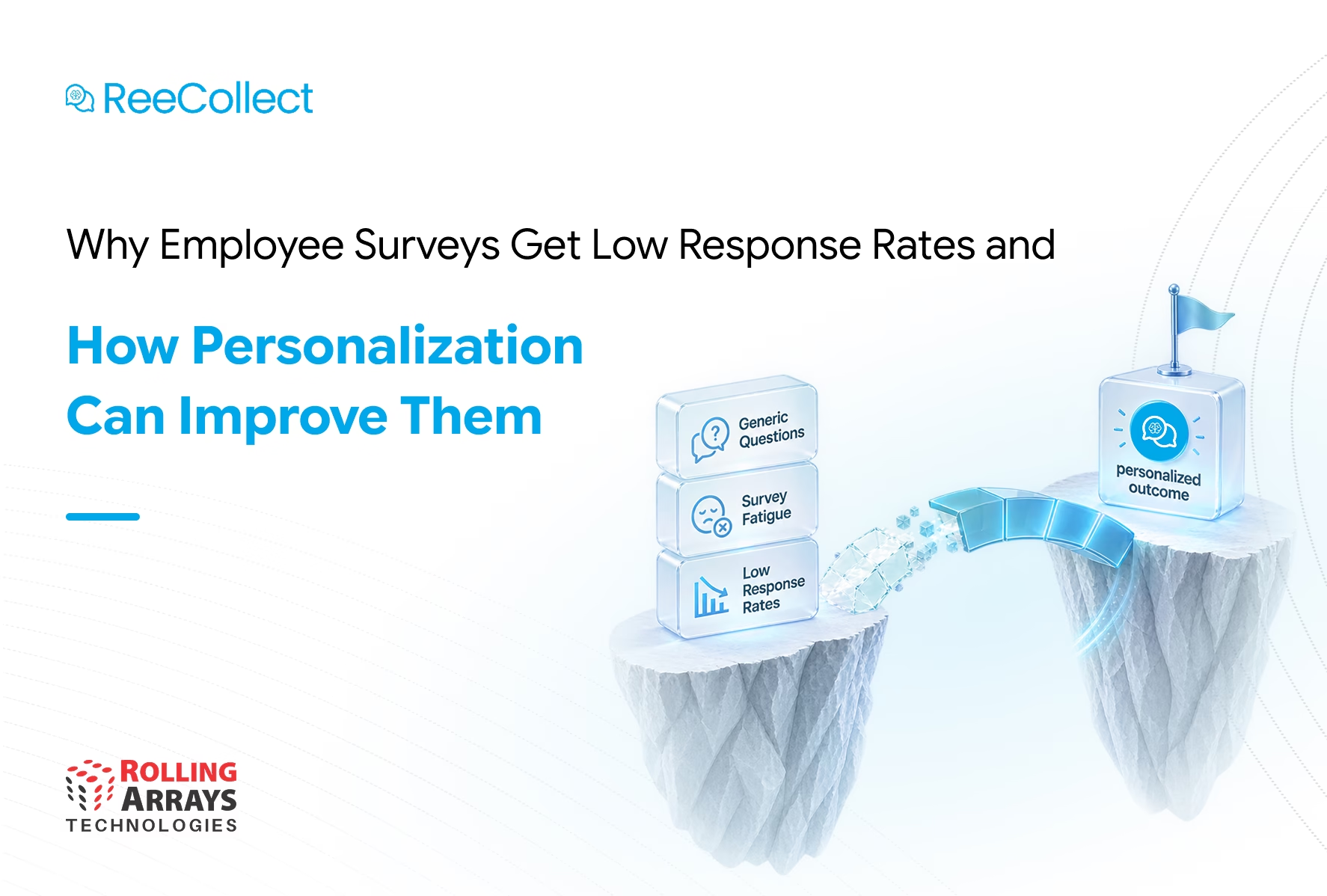
One major reason employees disengage from surveys is relevance. Generic surveys often present the same questions to employees regardless of their role, career stage, responsibilities, or recent experiences.
Employee survey personalization offers a different approach. Instead of asking everyone the same questions, organizations can create feedback experiences that reflect the employee’s context. With AI, organizations can tailor questions based on role, lifecycle stage, and sentiment, making feedback more relevant and meaningful.
Why Employee Survey Response Rates Remain Low
Low participation rarely comes down to one issue. Employees may receive too many surveys, encounter repetitive questions, or simply feel that their feedback does not relate to their experience.
Generic Questions Reduce Relevance
An employee in sales may have different experiences and priorities from someone in finance, technology, or HR. Asking every employee identical questions can make surveys feel disconnected from their day-to-day responsibilities.
When employees see questions that do not reflect their experience, they have less reason to invest time in completing the survey.
Long Surveys Create Survey Fatigue
Employees already manage multiple workplace responsibilities. A lengthy survey can quickly become another task competing for their attention.
When organizations repeatedly send lengthy or similar surveys, employees may become less willing to participate, reducing the overall survey participation rate.
Poor Timing Can Affect Participation
The timing of a survey can influence whether employees consider it relevant.
For example, asking a new employee about onboarding several months after they joined may not provide the same value as collecting feedback shortly after the onboarding experience.
Connecting feedback to the right lifecycle stage can make the request more timely and meaningful.
Why Personalization Matters in Employee Feedback Surveys
Personalization changes the way employees experience surveys.
Instead of treating the workforce as one audience, organizations can consider differences in roles, employee journeys, and experiences when designing feedback programs.
Personalize Questions by Employee Role
Employees in different roles often experience workplace processes differently.
A personalized survey can focus questions on areas that matter to a specific employee group, making the feedback experience more relevant.
For example, a manager may receive questions about team dynamics and leadership support, while an individual contributor may receive questions focused on collaboration, development, or workplace experience.
Personalize Feedback by Lifecycle Stage
Employee experience changes throughout the employee lifecycle.
Organizations can collect relevant feedback after key moments such as:
- Joining the organization
- Completing onboarding
- Participating in learning programs
- Completing performance reviews
- Moving into a new role
- Receiving a promotion
- Participating in engagement initiatives
Connecting surveys to these moments allows HR teams to gather feedback when the experience remains relevant to employees.
Personalize Questions Based on Sentiment
Employee sentiment can provide additional context for the feedback experience.
AI can help analyze previous responses and identify sentiment patterns, allowing organizations to explore areas that require deeper understanding.
Instead of asking a series of generic follow-up questions, a personalized feedback experience can explore the areas that matter most to the employee.
How AI Can Improve Employee Survey Personalization
AI adds another layer to personalized feedback.
Traditional survey creation requires HR teams to manually develop questions, define audiences, and determine how to structure different survey experiences.
An AI-powered approach can help streamline this process.
AI Assisted Survey Creation
AI can recommend questions based on the purpose of the survey and the context of the employee population.
This helps HR teams create relevant surveys while reducing the manual effort involved in designing every questionnaire from scratch.
Contextual Questions for Better Feedback
AI can use available employee context to help create questions that align with an individual’s role, lifecycle stage, and feedback history.
This can make the survey feel less like a standardized questionnaire and more like a relevant conversation.
Adaptive Feedback Experiences
Personalization can continue beyond the initial question.
A conversational feedback experience can adapt based on employee responses and sentiment, allowing the survey to explore relevant topics instead of following exactly the same path for every participant.
From Higher Survey Participation to Better Insights
Increasing the employee survey response rate is important, but participation alone does not determine the quality of an employee engagement survey.
Organizations also need meaningful responses that provide useful context.
More Relevant Questions Generate Better Context
When employees encounter questions that reflect their experience, they can provide more specific feedback.
This gives HR teams a richer understanding of what employees experience across different roles and stages of the employee journey.
AI Can Turn Responses into Actionable Insights
Collecting responses creates the foundation for analysis.
AI-powered analytics can identify patterns, uncover trends, and transform survey data into story-driven insights. This helps HR leaders and managers move beyond response counts and understand what the feedback means.
Connect Feedback to Organizational Action
The ultimate objective of an employee feedback survey is improvement.
Insights can help managers understand team dynamics, help HR identify workforce trends, and help leadership identify opportunities for broader organizational improvement.
How SAP SuccessFactors Can Add Context to Employee Feedback
Employee survey personalization becomes more powerful when feedback connects with the broader HR ecosystem.
SAP SuccessFactors contains employee information and supports processes across different stages of the employee journey. A feedback platform can use this context to create more relevant feedback experiences.
Connect Surveys to Employee Journeys
Organizations can align feedback programs with relevant HR processes and employee lifecycle moments.
This allows HR teams to move from generic surveys toward contextual feedback that reflects where employees are in their journey.
Use HR Context to Improve Relevance
Employee role, skills, performance information, engagement history, and other relevant HR context can help shape a more personalized feedback experience.
ReeCollect is designed to extend SAP SuccessFactors with AI-powered feedback capabilities, using connected HR context to support personalized surveys and deeper insights.
Build a More Personalized Employee Engagement Initiative
Improving survey participation does not require organizations to simply send fewer surveys. It requires organizations to make each feedback opportunity more relevant.
A stronger approach combines:
- Relevant questions based on employee roles
- Timely feedback connected to lifecycle stages
- AI-powered personalization based on context and sentiment
- Conversational experiences that encourage deeper responses
- AI-driven analytics that turn responses into actionable insights
This approach helps organizations build employee feedback surveys around the employee rather than around a standardized questionnaire.
Turn Generic Surveys into Personalized Feedback Experiences
A high employee survey response rate starts with giving employees a reason to participate.
When surveys reflect an employee’s role, experience, lifecycle stage, and sentiment, feedback becomes more relevant. When AI helps analyze those responses, organizations can move from simply collecting data to understanding the stories behind it.
ReeCollect brings AI-powered survey creation, personalization, contextual feedback, and analytics together as an extension to SAP SuccessFactors. It helps organizations personalize the feedback journey and turn employee responses into actionable insights for employees, managers, HR teams, and leaders.
Frequently Asked Questions
Why do employee surveys get low response rates?
Employee surveys often receive low participation when employees encounter generic questions, lengthy questionnaires, repetitive surveys, or feedback requests that do not relate closely to their current experience. Making surveys more relevant and timely can encourage greater participation.
How can personalization improve employee survey response rates?
Personalization makes surveys more relevant to each employee. Organizations can tailor questions based on factors such as role, lifecycle stage, and sentiment, helping employees receive questions that better reflect their experiences and encouraging more meaningful participation.
What is employee survey personalization?
Employee survey personalization means adapting the feedback experience to the individual or employee group rather than sending identical questions to everyone. Personalization can consider an employee’s role, lifecycle stage, experience, and other relevant context.
What factors can organizations use to personalize employee surveys?
Organizations can personalize surveys using factors such as employee role, lifecycle stage, skills, goals, engagement history, and sentiment. ReeCollect uses AI-powered personalization to help tailor the feedback experience based on employee context.
How can organizations reduce employee survey fatigue?
Organizations can reduce survey fatigue by keeping feedback relevant, asking focused questions, avoiding unnecessary repetition, and connecting surveys to meaningful employee moments. AI-assisted survey creation can also help HR teams develop more targeted feedback experiences.
How does AI improve employee feedback surveys?
AI can support survey creation by recommending relevant questions and can analyze responses to uncover patterns, trends, and deeper insights. ReeCollect combines AI-driven survey creation, personalization, and analytics to help organizations move from feedback collection to actionable insights.
Can employee surveys adapt to different lifecycle stages?
Yes. Organizations can connect feedback programs to employee lifecycle moments such as onboarding, learning, performance, role changes, and engagement initiatives. ReeCollect can use SAP SuccessFactors context to support feedback experiences tailored to employee journeys and key moments.
How does SAP SuccessFactors support personalized employee feedback?
SAP SuccessFactors provides relevant employee and HR context that can help organizations create more targeted feedback experiences. ReeCollect extends SAP SuccessFactors with contextual feedback capabilities and AI-powered personalization.
What is a good employee survey response rate?
There is no single response rate that defines a successful employee survey. Organizations should consider factors such as survey purpose, workforce size, audience, timing, and survey frequency. More importantly, HR teams should focus on collecting representative, relevant feedback that supports meaningful action.
How can employee engagement survey software improve participation?
Employee engagement survey software can streamline survey creation, distribution, reminders, targeting, and analysis. When the platform also supports personalization and contextual feedback, organizations can create more relevant experiences that encourage employees to participate.


