
Employee expectations around workplace benefits are changing rapidly across Asia Pacific. Traditional, one size fits all benefits programs no longer meet the needs of today’s diverse workforce. Employees increasingly expect benefits that reflect different life stages, work arrangements, and personal priorities while providing a seamless digital experience.
Many organizations have modernized core HR processes with SAP SuccessFactors, yet benefits administration often remains difficult to personalize at scale. As benefit programs become more flexible, HR teams require greater control over eligibility, entitlements, approvals, and employee self service. This article explores the growing demand for flexible benefits across APAC, why organizations are extending their HR technology, and what to look for in a modern employee benefits management solution.
Employee Expectations Around Benefits Are Changing
Across Asia Pacific, workforces have become more diverse than ever before.
Organizations now support employees across multiple countries, generations, employment types, and working models. At the same time, employees expect workplace benefits that align with their individual needs rather than standardized benefit packages.
While one employee may value additional healthcare coverage, another may prioritize wellness allowances, professional development, childcare support, transportation benefits, or flexible lifestyle programs.
These changing expectations have transformed benefits from an administrative process into an important part of the overall employee experience.
Employees increasingly expect to:
- View available benefits online.
- Understand eligibility instantly.
- Enroll without manual paperwork.
- Submit benefit claims digitally.
- Track claim status in real time.
- Receive faster approvals.
- Access benefits from any device.
Organizations that provide these experiences strengthen employee engagement while reducing administrative effort for HR teams.
Why Traditional Benefits Administration Struggles to Keep Up
Many organizations continue to manage flexible benefits through spreadsheets, email approvals, and disconnected administrative processes.
As benefit programs expand, these manual approaches become increasingly difficult to maintain.
HR teams often spend significant time:
- Managing multiple benefit plans.
- Verifying employee eligibility.
- Calculating benefit entitlements.
- Reviewing supporting documents.
- Coordinating approvals.
- Responding to employee enquiries.
- Reconciling payroll deductions.
These activities consume valuable administrative time while limiting visibility across the benefits lifecycle.
The challenge becomes even greater for organizations operating across multiple APAC countries, where benefit policies, statutory requirements, and employee expectations often vary by region.
Managing this complexity manually can slow benefit administration and make it harder to deliver a consistent employee experience.
Flexible Benefits Require Flexible Administration
Modern employee benefits management should enable HR teams to administer flexible benefits without relying on manual processes whenever policies or employee needs change.
Key capabilities include:
- Flexible benefit plans that support multiple benefit programs across countries, business units, and employee groups.
- Eligibility management that automatically determines employee eligibility based on organizational policies.
- Entitlement management that maintains accurate benefit balances, limits, and allocations.
- Employee self service that allows employees to explore benefits, submit claims, and reduce dependency on HR.
- Configurable approval workflows that standardize benefit requests and approval processes.
- Benefits analytics that provide visibility into benefit utilization and program performance.
- Payroll integration that synchronizes approved benefits with payroll for consistent HR operations.
Organizations that combine flexible benefit programs with intelligent benefits administration are better positioned to support changing workforce expectations while maintaining operational efficiency.
Why Organizations Are Extending SAP SuccessFactors for Flexible Benefits
SAP SuccessFactors provides a strong foundation for managing employee data, organizational structures, and core HR processes.
As employee benefits become more personalized, however, organizations often require additional capabilities to support the complete benefits lifecycle.
Flexible benefits programs require HR teams to manage multiple benefit plans, define eligibility rules, calculate entitlements, process claims, automate approvals, and provide employees with a seamless self service experience.
Rather than introducing disconnected processes, many organizations extend SAP SuccessFactors with dedicated benefits management capabilities that integrate directly with their existing HR ecosystem.
This approach enables organizations to maintain SAP SuccessFactors as their system of record while delivering the flexibility needed to support modern employee benefits.
AI Is Transforming Employee Benefits Management
Employee benefits administration has traditionally depended on repetitive manual activities.
HR teams spend considerable time validating eligibility, reviewing supporting documents, processing claims, coordinating approvals, and responding to employee enquiries.
Artificial intelligence is helping organizations simplify these administrative tasks.
AI powered benefits management can help organizations:
- Automate eligibility validation.
- Streamline benefit claims processing.
- Route approvals through configurable workflows.
- Validate supporting documents.
- Reduce manual administrative effort.
- Improve operational visibility.
- Strengthen policy compliance.
Rather than replacing HR professionals, AI enables them to focus more on improving employee wellbeing and delivering better workplace experiences.
What to Look for in a Flexible Benefits Management Solution
Supporting flexible benefits requires more than introducing additional benefit plans. Organizations should evaluate whether their benefits management solution can scale alongside changing workforce expectations while integrating seamlessly with SAP SuccessFactors.
A modern solution should provide:
- Flexible benefit plans that support diverse employee needs across countries, business units, and workforce segments.
- Eligibility and entitlement management that automatically determines employee eligibility and maintains accurate benefit balances.
- Employee self service that enables employees to explore benefits, submit claims, and track requests independently.
- AI powered workflows that simplify benefits administration and reduce manual effort.
- Configurable approvals that standardize approval processes across different benefit programs.
- Analytics and reporting that monitor benefit utilization, claims activity, and program performance.
- Payroll integration that synchronizes approved benefits with payroll processes.
- Audit ready governance that strengthens compliance and improves operational transparency.
Organizations that invest in these capabilities can create flexible benefits programs that scale with business growth while delivering a better employee experience.
Extending SAP SuccessFactors with AI Powered Benefits Management
Flexible benefits have become an important part of attracting, engaging, and retaining talent across Asia Pacific.
Organizations need technology that supports these evolving expectations without introducing additional operational complexity.
At Rolling Arrays Technologies, we have spent more than 15 years helping organizations extend SAP SuccessFactors with intelligent solutions built on SAP Business Technology Platform (SAP BTP).
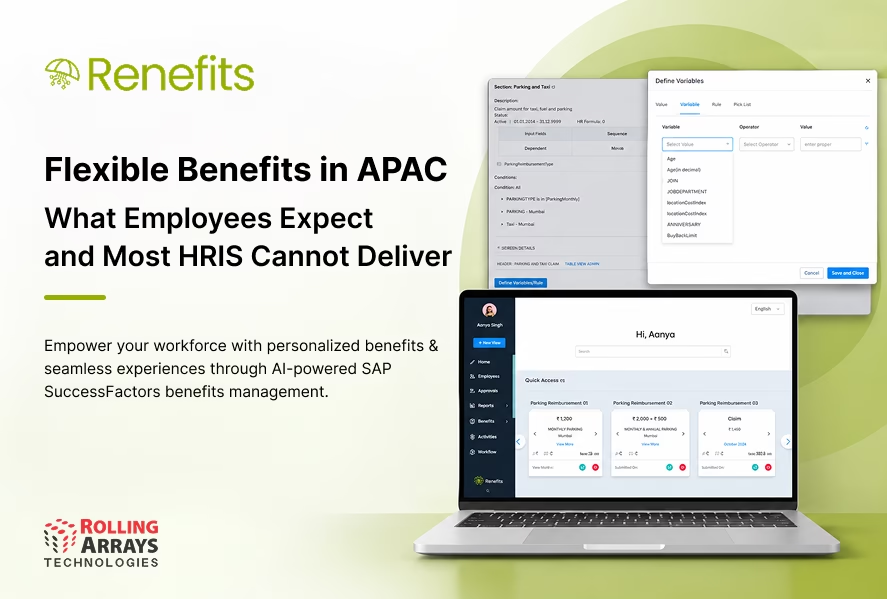
Renefits extends SAP SuccessFactors with AI powered employee benefits and claims management that helps organizations simplify benefits administration while delivering a connected employee experience.
Organizations can configure benefit plans, manage eligibility and entitlements, automate benefit claims, streamline approvals, improve employee self service, and gain greater visibility across benefits operations through one integrated solution.
Key Takeaways
- Flexible benefits have become an important part of the employee experience across Asia Pacific.
- Modern benefits programs require flexible administration, not manual spreadsheets and disconnected workflows.
- AI powered automation helps simplify benefits administration while reducing manual effort.
- Extending SAP SuccessFactors enables organizations to deliver personalized employee benefits without replacing their existing HR ecosystem.
- Connected benefits management improves employee experience, operational efficiency, and policy compliance.
Frequently Asked Questions About SAP SuccessFactors Benefits Management
What are flexible benefits?
Flexible benefits allow employees to choose from a range of benefit options that best suit their personal needs, lifestyle, and stage of life rather than receiving a standard benefits package.
Why are flexible benefits becoming more important across APAC?
Workforces across Asia Pacific have become increasingly diverse. Employees expect personalized benefits, digital self service, and greater flexibility, making modern benefits management an important part of the overall employee experience.
Can SAP SuccessFactors support flexible benefits?
SAP SuccessFactors provides a strong foundation for HR processes. Many organizations extend it with dedicated benefits management capabilities to support flexible benefit plans, eligibility management, employee self service, and benefit claims.
How does AI improve benefits administration?
What should organizations look for in a benefits management solution?
Organizations should look for configurable benefit plans, eligibility and entitlement management, employee self service, AI powered automation, configurable approvals, analytics, payroll integration, and audit ready governance.


