

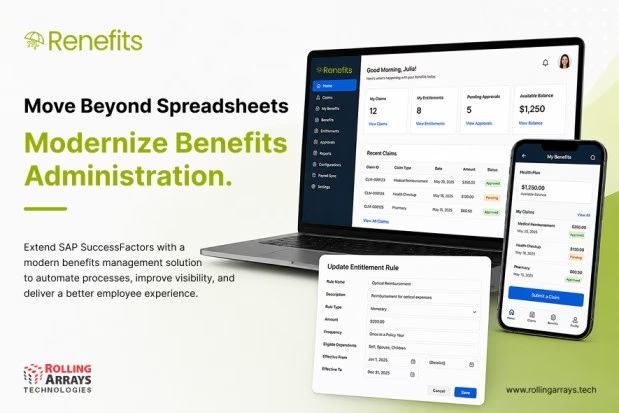
Organizations continue to invest in SAP SuccessFactors to modernize HR operations, improve employee experiences, and centralize workforce data. However, benefits administration often remains one of the few HR processes managed outside the system through spreadsheets, emails, and manual approvals. As benefit programs become more diverse, these disconnected processes increase administrative effort, reduce visibility, and make compliance more difficult to maintain.
Modern employee benefits management requires more than maintaining employee records. HR teams need flexible benefit plans, configurable eligibility rules, automated approvals, employee self service, and seamless integration with payroll and HR systems. This article explores why spreadsheets remain common in benefits administration, the operational challenges they create, and what organizations should look for when extending SAP SuccessFactors with a modern benefits management solution.
Why Benefits Administration Still Depends on Spreadsheets
Benefits administration, however, often follows a different path.
Benefit programs rarely remain static. Organizations continuously introduce new medical plans, wellness initiatives, insurance programs, flexible allowances, dependent benefits, and location specific policies. These programs frequently require unique eligibility rules, approval processes, entitlement calculations, and claim workflows.
When these requirements become more complex, HR teams often begin maintaining information outside the HRIS.
Typical examples include:
- Benefit eligibility spreadsheets
- Manual entitlement calculations
- Email based approval processes
- Offline benefit enrollment tracking
- Separate benefit claim records
- Payroll reconciliation spreadsheets
Each spreadsheet may solve an immediate operational need, but together they create fragmented processes that become increasingly difficult to manage as organizations grow.
The Hidden Cost of Spreadsheet Driven Benefits Administration
Maintaining them at enterprise scale is not.
Every manual update introduces opportunities for inconsistent data, duplicated effort, delayed approvals, and limited operational visibility.
HR teams spend valuable time validating eligibility, checking benefit balances, reconciling payroll deductions, responding to employee enquiries, and coordinating approvals across multiple stakeholders.
Common operational challenges include:
- Manual benefit eligibility validation
- Inconsistent entitlement calculations
- Limited visibility into benefit utilization
- Slow claim processing
- Duplicate administrative effort
- Higher compliance risk
- Difficulty supporting multiple benefit programs
- Limited employee self service
As employee populations grow across countries, business units, and benefit programs, these manual processes become increasingly difficult to sustain.
Modern Benefits Administration Requires More Than Employee Records
- Benefit plan management to configure and manage multiple employee benefit programs from a centralized platform.
- Eligibility management to automatically determine employee eligibility based on organizational policies.
- Entitlement management to calculate and maintain accurate benefit balances and limits.
- Employee self service to enable employees to explore benefits, submit claims, and reduce HR enquiries.
- Configurable approval workflows to standardize benefit requests and approval processes.
- Payroll integration to synchronize approved benefits with payroll systems.
Reporting and analytics to improve operational visibility and support better decision making.
Rather than relying on spreadsheets to bridge process gaps, organizations can extend SAP SuccessFactors with capabilities specifically designed for employee benefits administration.
Why Organizations Are Extending SAP SuccessFactors for Benefits Administration
SAP SuccessFactors provides a strong foundation for core HR processes by centralizing employee data and supporting workforce management.
As benefits programs become more sophisticated, however, many organizations require additional capabilities to manage the complete benefits lifecycle.
Modern benefits administration involves much more than recording employee information. HR teams need to manage benefit plans, define eligibility criteria, automate entitlement calculations, process benefit claims, route approvals, maintain compliance, and provide employees with a seamless self service experience.
Instead of introducing disconnected applications, many organizations choose to extend SAP SuccessFactors with purpose built benefits management solutions that integrate directly with their existing HR environment.
This approach allows organizations to maintain SAP SuccessFactors as the system of record while adding the flexibility needed to manage complex employee benefits efficiently.
AI Is Simplifying Employee Benefits Administration
Artificial intelligence is changing how organizations manage these processes.
Rather than replacing HR teams, AI helps automate routine administrative tasks so HR professionals can focus on improving employee experiences and managing strategic benefits programs.
AI powered benefits management can help organizations:
- Automate benefit eligibility validation.
- Simplify benefit claims processing.
- Route approvals using configurable business rules.
- Validate submitted documents.
- Reduce manual administrative effort.
- Improve operational visibility.
- Strengthen policy compliance.
By reducing repetitive work, AI enables HR teams to process benefits more efficiently while maintaining greater consistency across the organization.
What to Look for in a Benefits Management Solution
Look for solutions that provide:
- Configurable benefit plans to support multiple benefit programs across employee groups and business units.
- Eligibility and entitlement management to automatically determine employee eligibility and maintain benefit balances.
- Employee self service that enables employees to explore benefits, submit claims, and track requests independently.
- AI powered workflows that reduce manual administration and improve processing efficiency.
- Configurable approvals that standardize benefit requests across the organization.
- Payroll integration that synchronizes approved benefits with payroll systems.
- Analytics and reporting that monitor benefit utilization, claims activity, and operational performance.
- Audit ready governance that strengthens compliance and administrative transparency.
Organizations that adopt these capabilities can simplify benefits administration without disrupting their existing HR technology investments.
Extending SAP SuccessFactors with AI Powered Benefits Management
Modern HR platforms continue to evolve alongside changing workforce expectations.
Employee benefits should evolve as well.
At Rolling Arrays Technologies, we have spent more than 15 years helping organizations extend SAP SuccessFactors with intelligent solutions built on SAP Business Technology Platform (SAP BTP).
Renefits extends SAP SuccessFactors with AI powered employee benefits and claims management that helps organizations simplify benefits administration while maintaining a connected HR ecosystem.
Organizations can configure benefit plans, automate eligibility and entitlement management, streamline benefit claims, improve employee self service, strengthen compliance, and gain greater visibility across benefits operations—all without introducing disconnected manual processes.
By extending existing SAP SuccessFactors investments, organizations can modernize benefits administration while continuing to use SAP SuccessFactors as their single source of truth.
Key Takeaways
✔ Modern employee benefits management requires configurable plans, eligibility rules, approvals, and employee self service.
✔ AI powered automation helps reduce manual effort while improving consistency and operational efficiency.
✔ Extending SAP SuccessFactors enables organizations to modernize benefits administration without replacing their existing HRIS.
✔ Connected benefits management improves employee experience, strengthens compliance, and provides greater operational visibility.
Frequently Asked Questions About SAP SuccessFactors Document Management
Why do organizations still use spreadsheets for benefits administration?
Many organizations manage benefit eligibility, entitlements, approvals, and claims outside their HRIS because benefits programs often require greater flexibility than standard HR processes.
Can SAP SuccessFactors support employee benefits management?
SAP SuccessFactors provides a strong foundation for core HR data. Many organizations extend it with dedicated benefits management solutions to support more advanced benefit administration, eligibility management, claims processing, and employee self service.
What are the advantages of AI powered benefits administration?
AI helps automate repetitive administrative tasks such as eligibility validation, document verification, workflow routing, and claims processing, improving efficiency while reducing manual effort.
What capabilities should a benefits management solution include?
How does employee self service improve benefits administration?
Employee self service enables employees to explore benefit plans, verify eligibility, submit claims, and track approvals independently, reducing HR enquiries while improving the overall employee experience.



One Comment