
Why Employee Benefits Need to Evolve
Employee expectations continue to change as organizations build more diverse and distributed workforces. Employees increasingly look beyond salary and traditional fixed benefits when evaluating their overall employment experience.
Different employees may value different forms of support. One employee may prioritize wellness and mental health programs, while another may value family-related benefits. Employees working remotely, across locations, or through non-traditional employment models may also have different benefits needs.
This diversity creates a challenge for HR teams. Traditional fixed benefit structures can make it difficult to provide personalized choices while maintaining consistent employee benefits management.
Organizations therefore need benefits programs that can adapt to different employee groups without creating additional administrative complexity.
What Is Driving the Shift Toward Flexible Employee Benefits?
Several workforce trends are changing how organizations approach employee benefits.
Growing Focus on Employee Wellness
Wellness has become an increasingly important part of the employee experience. Organizations are expanding their benefits beyond traditional healthcare coverage to include programs that support physical and financial wellbeing.
Flexible benefits can give employees greater choice in how they use available benefits based on their individual needs.
Greater Attention to Mental Health
Mental health support has also become an important consideration for employers and employees.
Organizations can incorporate mental wellness programs, counselling support, wellbeing resources, and other services into broader benefits programs.
A flexible approach allows organizations to structure these offerings for different employee populations while giving employees greater visibility into the support available to them.
The Rise of Gig and Non-Traditional Workforces
The workforce now includes a wider range of employment models, including contractors, freelancers, temporary workers, and gig workers.
Traditional benefits administration often assumes a relatively standardized employee population. Different workforce models require organizations to consider eligibility rules, entitlements, and benefit structures more carefully.
A flexible employee benefits platform can help organizations define different eligibility criteria and benefit offerings for relevant workforce groups.
Greater Workforce Mobility
Employees may work remotely, relocate, or support teams across different locations.
Different employee populations can have different benefit structures, policies, currencies, and administrative requirements.
This makes centralized employee benefits administration increasingly important for organizations managing a diverse workforce.
What Makes a Flexible Benefits Platform Different?
A flexible benefits platform does more than provide employees with a digital list of benefits.
It gives HR teams the ability to configure benefit programs around organizational policies while allowing employees to access relevant benefits through a centralized experience.
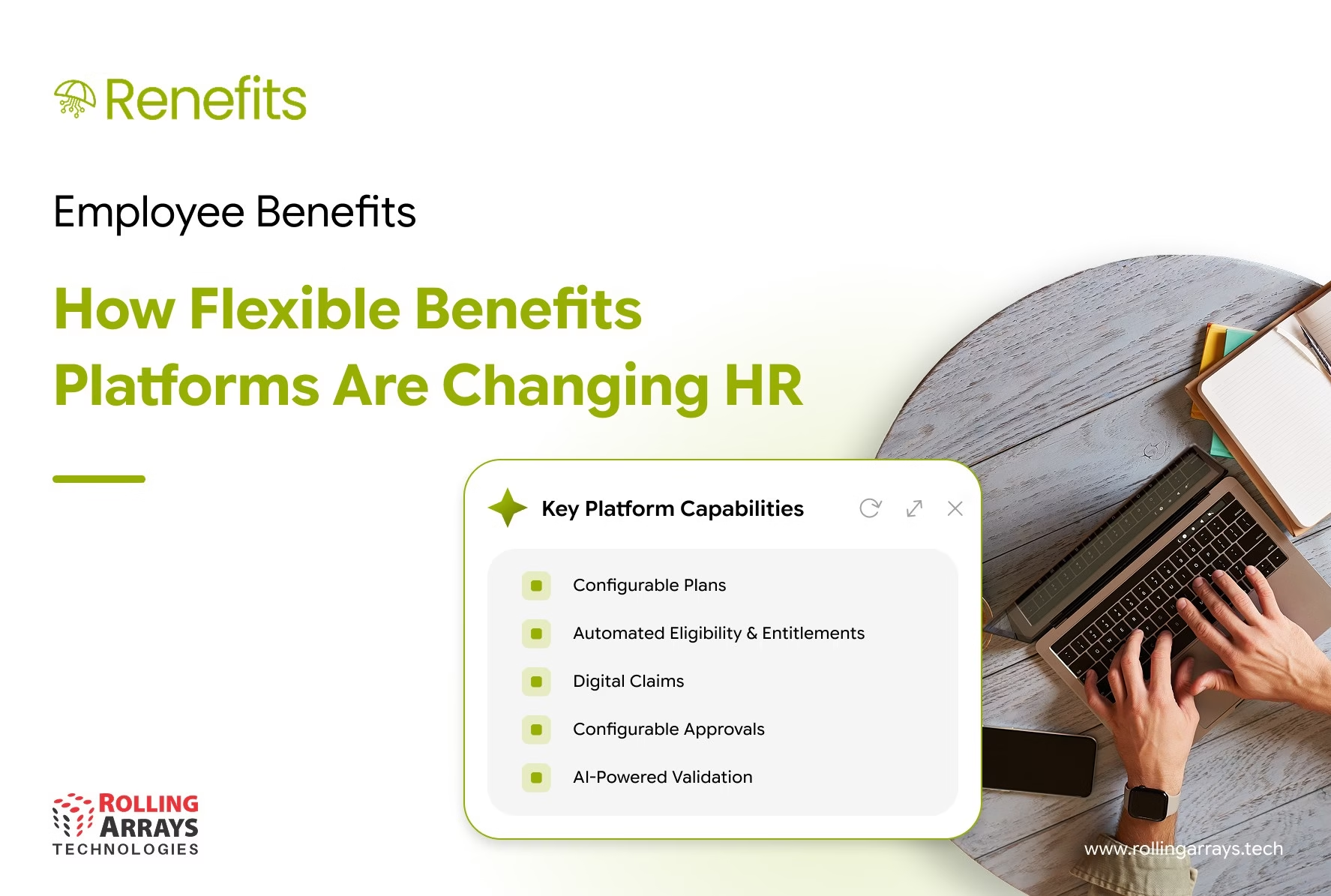
Key capabilities include:
- Configurable benefit plans: HR teams can configure different plans according to organizational requirements.
- Eligibility management: Organizations can define which employees qualify for specific benefits.
- Entitlement management: Benefit entitlements can reflect employee groups, policies, and organizational rules.
- Digital claims: Employees can submit benefit claims and supporting documents through a centralized process.
- Approval workflows: Claims and requests can follow configurable approval rules.
- Employee self service: Employees can view available benefits, understand entitlements, submit claims, and track their requests.
- Reporting and visibility: HR teams can gain greater visibility into benefits utilization and administration.
These capabilities help organizations create flexibility without relying heavily on spreadsheets, emails, and disconnected processes.
How Flexible Benefits Improve the Employee Experience
The value of flexible benefits extends beyond HR administration.
Employees increasingly expect digital experiences that make it easy to understand and access workplace benefits.
A centralized platform can help employees:
- View their available benefits
- Understand their eligibility
- Check benefit entitlements
- Submit claims digitally
- Upload supporting documents
- Track claim status
- Access benefits information without depending entirely on HR teams
This creates greater transparency and gives employees more control over their benefits experience.
How Technology Can Simplify Benefits Administration
Flexible benefits can create additional complexity if HR teams manage every variation manually.
Technology can help organizations manage that complexity through configurable rules and automated workflows.
Automating Eligibility and Entitlements
HR teams can define rules that determine employee eligibility and benefit entitlements. Automation can then apply these rules consistently across relevant employee groups.
Digitizing Benefits Claims
Employees can submit claims electronically and attach supporting documents. Digital workflows reduce dependence on paper forms and email-based processes.
Streamlining Approvals
Configurable workflows can route claims and requests to the appropriate approvers based on organizational policies.
Improving Visibility
Centralized information gives HR teams greater visibility into benefit programs, claims, approvals, and employee utilization.
This helps HR teams manage benefits more efficiently while providing employees with clearer information.
Can AI Make Flexible Benefits Management More Effective?
AI can add another layer of automation to employee benefits management.
AI powered document and receipt validation can help organizations process benefit claims more efficiently. Intelligent validation can support policy checks and identify potential issues before claims move through the approval process.
AI can also reduce repetitive administrative work, allowing HR teams to focus more on employee experience and benefits strategy.
The goal is not to replace HR decision-making. Instead, AI can support HR teams by automating repetitive tasks and providing better information during benefits administration.
How Renefits Supports Flexible Employee Benefits
Renefits extends SAP SuccessFactors with an employee benefits management experience designed to help organizations manage benefits through a centralized digital platform.
Organizations can configure benefit plans, eligibility rules, entitlements, claims, approvals, and employee self service while maintaining a connected experience within their SAP SuccessFactors environment.
Renefits supports areas such as:
- Flexible benefit plan configuration
- Eligibility and entitlement management
- Employee benefits claims
- Digital document and receipt submission
- Configurable approval workflows
- Employee self service
- Benefits administration and reporting
- AI powered claim and document validation
This enables organizations to adapt benefits programs to different employee needs while keeping administration structured and connected.
What Should HR Leaders Consider When Choosing an Employee Benefits Platform?
Organizations should evaluate more than the number of benefits a platform can support.
A strong employee benefits platform should help HR teams balance flexibility, control, employee experience, and operational efficiency.
HR leaders should consider whether the solution can:
- Support different employee groups and eligibility rules
- Configure benefits without excessive technical dependency
- Manage entitlements consistently
- Digitize benefits claims and supporting documents
- Automate approval workflows
- Provide employee self service
- Integrate with the organization’s HR ecosystem
- Provide visibility into benefits administration
- Introduce AI where it can reduce repetitive work and improve validation
The right platform should make benefits more flexible for employees without making administration more complicated for HR.
The Future of Employee Benefits
The future of employee benefits will move further toward choice, personalization, and digital access.
Organizations will need to support employees with different lifestyles, workforce arrangements, locations, and expectations. Wellness, mental health, financial wellbeing, non-traditional workforce models, and employee mobility will continue to influence how organizations design their benefits programs.
This shift does not mean every organization needs to offer unlimited choices. It means organizations need the flexibility to design relevant benefits and manage them efficiently.
A modern flexible benefits platform can provide the technology foundation for this shift by connecting benefit plans, eligibility, entitlements, claims, approvals, and employee self service.
For HR leaders, the opportunity is to move from managing fixed benefits as administrative programs to creating flexible benefits experiences that adapt to the workforce.
Frequently Asked Questions
What are flexible employee benefits?
Flexible employee benefits allow employees to access or select benefits based on their eligibility, preferences, and individual needs rather than relying entirely on a fixed benefits structure.
Why are flexible benefits becoming more important?
Changing employee expectations, diverse workforce models, wellness priorities, and greater workforce mobility are encouraging organizations to provide benefits that can adapt to different employee needs.
What does an employee benefits platform do?
An employee benefits platform helps organizations configure benefit plans, manage eligibility and entitlements, process claims, automate approvals, and provide employees with self service access to benefits.
How can technology improve employee benefits administration?
Technology can automate eligibility checks, entitlement calculations, claims processing, document submission, approval workflows, and reporting, reducing manual administrative effort.
Can AI support employee benefits management?
Yes. AI can support areas such as receipt and document validation, claim processing, policy checks, and other repetitive administrative activities within benefits management.
How does Renefits support employee benefits management?
Renefits extends SAP SuccessFactors with capabilities for benefit plan configuration, eligibility, entitlements, claims, approvals, employee self service, and AI powered validation.


