
The first year of employment is a critical period in the employee journey. New hires are expected to adapt to organizational culture, understand their responsibilities, build relationships with colleagues, and establish their place within the organization. When these expectations are not met, employees may begin considering other opportunities much earlier than HR leaders anticipate.
For CHROs, early employee turnover creates more than recruitment costs. It affects workforce continuity, productivity, team performance, and the return on investment in hiring and onboarding.
Yet many organizations rely on periodic engagement surveys or exit interviews to understand employee dissatisfaction. By the time employees share their concerns, the opportunity to address them may already have passed.
A more proactive approach connects employee feedback with important moments throughout the first year. With ReeCollect, an AI-first employee feedback platform built for SAP SuccessFactors, organizations can collect contextual feedback, identify employee experience concerns, and generate insights that help HR teams take timely action.
Why First Year Employee Attrition Remains a Challenge for CHROs
Recruiting the right talent is only the beginning. Organizations must also ensure that new employees receive the support, clarity, and working environment they need to succeed.
However, several challenges can affect new hire retention.
1. Employees Struggle to Adjust During Onboarding
The onboarding process shapes an employee’s first impression of the organization.
Unclear responsibilities, inadequate training, limited access to resources, and difficulty navigating internal processes can make new employees feel unsupported.
Although HR teams may complete all formal onboarding activities, this does not necessarily mean employees feel confident or comfortable in their new roles.
Without structured onboarding surveys, organizations may miss these early concerns.
2. Expectations and Actual Job Experiences Do Not Match
Employees may join an organization with expectations about their responsibilities, career opportunities, work environment, and management support.
When their actual experience differs significantly from those expectations, dissatisfaction can develop.
Regular employee feedback helps HR teams understand whether new hires find their roles meaningful, receive adequate guidance, and feel connected to organizational goals.
3. Manager and Team Relationships Influence Retention
The relationship between employees, their managers, and their immediate teams plays an important role in the early employment experience.
New employees may hesitate to raise concerns about communication, workload, unclear expectations, or lack of support.
When HR teams depend only on formal complaints or exit interviews, these issues may remain unnoticed.
4. HR Teams Often Identify Attrition Risks Too Late
Traditional employee retention analytics often focus on historical turnover, exit reasons, and workforce trends.
While these metrics help explain what has happened, they may not adequately capture what current employees are experiencing.
CHROs need to understand employee sentiment while employees are still part of the organization.
This requires a feedback process that captures concerns throughout the employee journey rather than relying exclusively on annual engagement surveys.
A well-designed feedback programme should also consider improving employee survey response rates to ensure HR teams receive meaningful input from their workforce.
How Employee Feedback Can Improve New Hire Retention
Reducing early employee turnover requires organizations to understand why employees become disengaged and where improvements are needed.
Employee feedback provides an opportunity to identify these concerns before they develop into resignation decisions.
Capture Feedback at Important Onboarding Milestones
Rather than waiting until the end of the first year, organizations can collect feedback at relevant stages of the onboarding journey.
For example:
- First 30 days: Understand the joining experience, access to resources, and initial role clarity.
- First 60 days: Evaluate training effectiveness, team integration, and manager support.
- First 90 days: Understand role confidence, expectations, and early challenges.
- Six months: Assess job satisfaction, development opportunities, and organizational belonging.
- Twelve months: Review the overall employee experience and identify opportunities for improvement.
These milestones provide HR teams with opportunities to understand how employee experiences evolve over time.
Rather than relying only on periodic surveys, organisations can adopt continuous employee listening to understand employee experiences at different stages of the employment journey.
Understand the Reasons Behind Employee Disengagement
Employee engagement surveys can help organizations identify concerns that may otherwise remain invisible.
Questions can explore areas such as:
- Clarity of job responsibilities
- Manager communication and support
- Workload and work environment
- Training and development opportunities
- Team collaboration
- Career growth expectations
- Overall satisfaction with the employee experience
The objective is not simply to collect survey responses. It is to understand the experiences influencing employee engagement and retention.
Organisations can further explore how AI-powered employee surveys help personalise feedback collection and make employee listening more relevant across different workforce groups.
Identify Patterns Across Departments and Employee Groups
First-year attrition may not affect every department or employee group equally.
For example, employees in a particular business unit may experience inadequate onboarding support, while another group may report concerns about workload or manager communication.
Analyzing feedback across relevant employee groups helps HR leaders identify recurring concerns and prioritize organizational improvements.
Turn Feedback into Timely HR Interventions
Collecting employee feedback alone does not improve retention.
Organizations must translate feedback into appropriate action.
Depending on the concerns identified, HR teams and managers may consider:
- Additional onboarding support
- Role clarification discussions
- Manager coaching
- Targeted learning interventions
- Career development conversations
- Improvements to team communication
- Follow-up discussions with employees who report concerns
A structured feedback process helps organizations identify where these interventions may be most valuable.
How ReeCollect Supports Employee Feedback and Retention in SAP SuccessFactors
For organizations using SAP SuccessFactors, employee information already provides an important foundation for understanding the workforce.
However, HR teams also need a structured way to collect feedback, understand employee experiences, and identify areas that require attention.
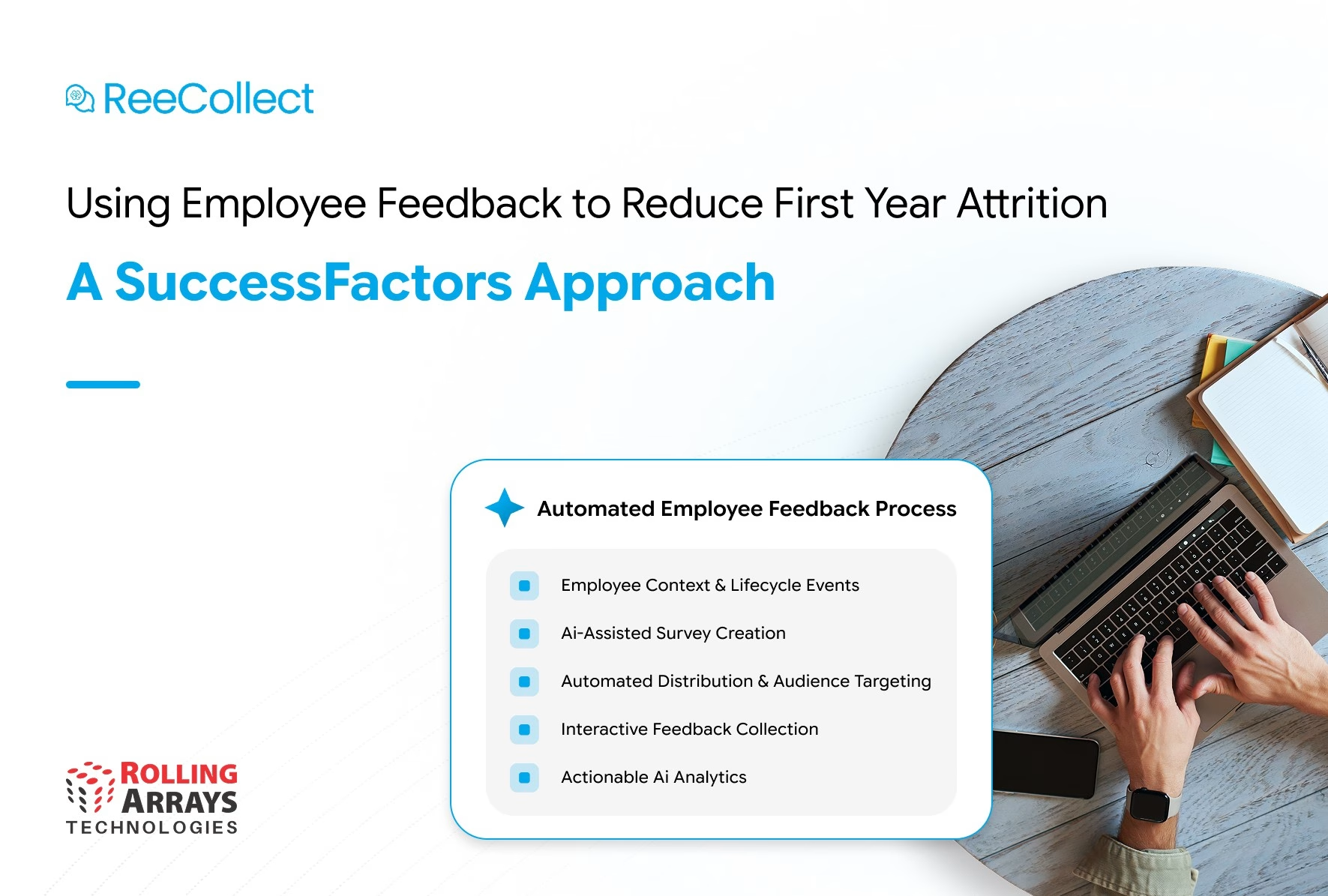
ReeCollect extends SAP SuccessFactors with AI-powered employee feedback capabilities. It uses employee profiles, roles, and key moments to support relevant survey deployment and personalized feedback experiences.
1. Collect Feedback Around the New Hire Experience
ReeCollect supports survey deployment around important employee lifecycle moments, including onboarding feedback triggered by HRMS events.
This helps organizations connect feedback collection with the employee onboarding journey rather than depending entirely on manually coordinated surveys.
HR teams can use onboarding feedback to understand how new employees experience the joining process, access to resources, and organizational integration.
2. Personalize Questions Using Employee Context
Employees in different roles and departments may experience different challenges during their first year.
A generic questionnaire may not capture these differences effectively.
ReeCollect uses AI to support context-aware survey questions based on employee information such as roles, competencies, engagement history, and previous responses.
This helps organizations create more relevant feedback experiences across different employee groups.
3. Simplify Survey Distribution and Follow-Up
Managing multiple onboarding and engagement surveys can create additional administrative work for HR teams.
ReeCollect supports survey audience targeting, scheduling, and reminder configuration.
These capabilities help HR teams organize feedback programs for relevant employee groups and manage survey distribution more efficiently.
4. Identify Employee Experience Trends Through AI Insights
Survey responses can contain valuable information about employee experiences, but reviewing large volumes of qualitative feedback manually can be challenging.
ReeCollect uses AI-powered analytics to organize employee responses, identify trends, and generate story-driven insights.
These insights can help HR teams understand recurring concerns across employee groups and determine where further investigation may be required.
To understand how organisations can move beyond collecting responses, explore turning employee feedback into actionable insights through AI-assisted analysis.
5. Support More Informed Retention Decisions
ReeCollect helps organizations bring employee feedback and insights into a more structured process.
By combining relevant employee context with feedback collected at important lifecycle moments, HR teams can gain a better understanding of employee experiences.
This information can support discussions between HR leaders and managers about onboarding improvements, employee support, and retention initiatives.
ReeCollect does not replace dedicated attrition prediction models or guarantee employee retention. Instead, it strengthens the employee feedback process that supports more informed retention decisions.
How CHROs Can Measure Progress in First Year Employee Attrition Reduction
A successful retention strategy requires organizations to monitor both workforce outcomes and employee experience indicators.
CHROs can consider tracking the following measures:
First Year Attrition Rate
Measures the proportion of employees who leave the organization within their first year.
This helps leadership understand the scale of early employee turnover and monitor changes over time.
90 Day and Six Month Retention
Tracking retention at different milestones helps organizations understand when employees are most likely to leave.
Onboarding Feedback Scores
Survey responses can help HR teams evaluate the quality of onboarding experiences and identify areas requiring improvement.
Employee Engagement Trends
Changes in employee engagement feedback can help organizations understand how employee experiences evolve during the first year.
Manager and Team Experience
Feedback concerning manager support, communication, and team integration can help identify potential organizational challenges.
Feedback Action Closure
HR teams should also monitor whether concerns raised through surveys lead to appropriate follow-up actions.
Together, these measures provide a broader view of employee experience and retention performance.
Move Beyond Exit Interviews: Build a Proactive Employee Retention Strategy
First-year attrition is not simply a recruitment problem. It is also an employee experience challenge.
Organizations that wait for exit interviews to understand why employees leave may miss opportunities to address concerns earlier.
By collecting feedback at important moments, understanding employee experiences, and acting on recurring concerns, HR leaders can build a more proactive approach to new hire retention.
ReeCollect helps organizations strengthen this process within SAP SuccessFactors through AI-assisted survey creation, context-aware feedback collection, survey management, and actionable insights.
Give HR leaders an opportunity to listen before employees decide to leave.
Discover how ReeCollect can support your employee feedback strategy:
Frequently Asked Questions
What is first year employee attrition?
First-year employee attrition refers to employees leaving an organization within their first twelve months of employment. It can result from onboarding challenges, role mismatch, inadequate manager support, limited development opportunities, or differences between job expectations and actual experiences.
How can employee feedback help reduce early employee turnover?
Employee feedback helps organizations identify dissatisfaction, onboarding challenges, and workplace concerns while employees are still employed. HR teams can use these insights to initiate discussions and implement appropriate interventions before concerns escalate.
Why are onboarding surveys important for new hire retention?
Onboarding surveys help organizations understand whether new employees receive adequate information, resources, training, and manager support. Collecting feedback at relevant onboarding milestones helps HR teams identify gaps and improve the joining experience.
How frequently should organizations collect employee engagement feedback during the first year?
Organizations can collect feedback at meaningful intervals, such as 30, 60, and 90 days, followed by six-month and twelve-month assessments. The frequency should reflect the employee journey and avoid unnecessary survey fatigue.
What role does employee retention analytics play in reducing attrition?
Employee retention analytics helps HR leaders understand turnover patterns across departments, roles, tenure groups, and other workforce segments. Combining these measures with employee feedback provides additional context about the experiences associated with employee dissatisfaction.
How does SAP SuccessFactors support employee retention initiatives?
SAP SuccessFactors provides workforce and employee information that organizations can use to support HR processes and employee lifecycle management. With complementary solutions such as ReeCollect, organizations can extend this environment with AI-assisted employee feedback collection and analysis.
How does ReeCollect help improve new hire retention?
ReeCollect helps organizations collect feedback around employee lifecycle moments, including onboarding. It supports context-aware survey questions, survey distribution, and AI-powered analysis, helping HR teams understand employee experiences and identify areas that may require intervention.
Can employee engagement surveys predict which employees will leave?
Employee engagement surveys can reveal dissatisfaction and potential retention concerns, but they cannot independently predict with certainty which employees will resign. Organizations should combine employee feedback with workforce analytics, manager insights, and appropriate follow-up processes.


