
As organizations across APAC continue their digital transformation, HR teams are rethinking how they manage employee documents. Paper files and fragmented document processes often increase administrative effort, slow document retrieval, and make compliance more challenging. Digital HR document management helps organizations centralize employee records, automate document generation, strengthen governance, and improve accessibility within existing HR systems. This article explores the key drivers behind this shift and why more enterprises are adopting digital personnel files.
Why Paper Personnel Files No Longer Support Modern HR Operations
For many organizations, paper personnel files were once the standard for storing employee records. As workforces become larger, more distributed, and increasingly digital, this approach creates operational challenges that affect both HR teams and employees.
- Offer letters
- Employment contracts
- Promotion letters
- Salary revision letters
- Performance records
- Compliance documents
- Exit documentation
Managing these documents across paper files, shared drives, and email attachments often requires significant manual effort.
Some of the common challenges include:
Paper-based document management relies on manual document filing, physical document retrieval, duplicate document versions, manual approvals, limited remote access, and higher administrative effort. In contrast, digital HR document management provides a centralized digital document repository, instant document search, version-controlled documents, automated approval workflows, secure access from anywhere, and streamlined HR operations.
As organizations continue investing in digital HR transformation, many are also modernizing how employee documents are generated, stored, approved, and retrieved.
The Growing Compliance Challenge Across APAC
Compliance expectations continue to evolve across the Asia Pacific region. Countries including Singapore, Malaysia, and Thailand have strengthened personal data protection requirements, making secure employee document management more important than ever.
- Protect confidential employee information.
- Maintain complete audit trails.
- Control document access based on user roles.
- Retain documents according to organizational policies.
- Retrieve employee records quickly during audits.
Managing these responsibilities through paper files or disconnected storage locations can increase administrative complexity as organizations grow across multiple business units or countries.
Digital personnel files provide a more structured approach by centralizing employee records, improving access control, and supporting consistent document governance across HR operations.
Why HR Teams Are Adopting Digital Personnel Files Across APAC
Moving away from paper is no longer just about reducing storage space. Organizations are investing in digital HR document management to improve efficiency, strengthen compliance, and deliver a better employee experience. Some of the key business drivers include:
Faster Document Retrieval
HR teams no longer need to search through filing cabinets, shared folders, or email chains. Digital document repositories allow authorized users to retrieve employee records instantly using keywords, employee details, or document metadata.
Better Employee Experience
Employees frequently request documents such as employment letters, salary certificates, promotion letters, and historical records. Digital personnel files enable HR teams to respond faster while also supporting employee self-service for common document requests.
Improved Collaboration
Employee documents often move through multiple stakeholders, including HR, managers, finance teams, and employees. Structured digital workflows make approvals more transparent while reducing manual coordination.
Stronger Governance
Centralized document management helps organizations apply consistent document retention policies, maintain version control, and strengthen audit readiness across HR operations.
Digital Personnel Files vs Traditional Paper Records
Traditional paper personnel files rely on manual document filing, physical signatures, limited search capabilities, paper archives, manual document generation, difficult audit preparation, and office-only access. In contrast, digital personnel files provide centralized document management, digital signature workflows, OCR-powered document search, secure digital storage, AI-powered document generation, complete audit history and document tracking, and secure access for authorized users from anywhere.
As organizations continue modernizing HR operations, digital personnel files are becoming an important part of broader digital transformation initiatives.
What Modern HR Document Management Looks Like
Modern HR document management goes far beyond storing employee files digitally. Today’s organizations are looking for solutions that support the complete employee document lifecycle while integrating seamlessly with existing HR systems. Key capabilities include:
AI-Powered Document Generation
Organizations can automatically generate employee documents using predefined templates and employee data. Documents such as offer letters, confirmation letters, promotion letters, and salary revision letters can be created consistently while reducing manual effort.
OCR-Based Document Search
Optical Character Recognition (OCR) enables HR teams to search documents using keywords instead of manually browsing folders, significantly reducing document retrieval time.
Digital Signature Integration
Integrated digital signatures simplify approvals and help organizations maintain secure, trackable document workflows without relying on paper-based signing processes.
Employee Self-Service
Employees can securely access their own employment documents whenever required, reducing HR administrative requests while improving the employee experience.
Document Governance
Role-based access, configurable retention policies, version history, and audit trails help organizations maintain better control over employee documentation.
Building on SAP SuccessFactors with Native Document Management
Many organizations already use SAP SuccessFactors as the foundation of their HR operations. As document volumes grow, they often look for ways to extend document lifecycle management without introducing disconnected systems or duplicate employee records.
Native document management solutions allow organizations to manage document generation, approvals, storage, retrieval, and digital signatures while continuing to work within their existing SAP SuccessFactors environment.
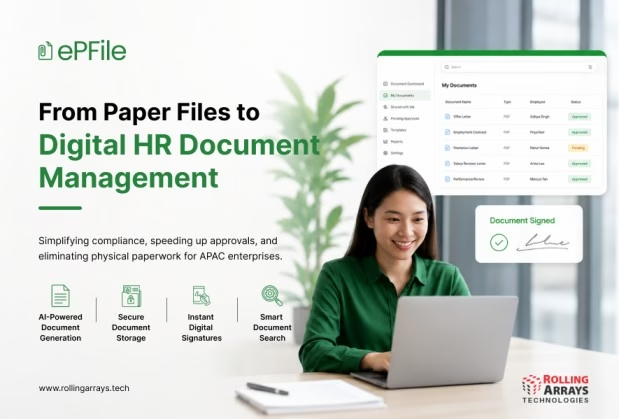
ePFile from Rolling Arrays Technologies is designed for this purpose. It extends SAP SuccessFactors with AI-powered document generation, OCR-enabled search, integrated DocuSign support, secure document storage, employee self-service, and audit-ready document governance, all within a single HR environment.
Instead of managing employee documents across multiple applications, HR teams can simplify document workflows while maintaining consistency, compliance, and operational efficiency.
Paperless HR Document Management in Action
Organizations across Asia Pacific are adopting paperless HR document management to simplify employee document workflows while supporting compliance and operational efficiency. Some common use cases include:
For onboarding, traditional processes rely on manual preparation of offer letters and employment documents, while the digital approach uses automated document generation with predefined templates. For promotions, individual letter creation and email approvals are replaced by workflow-driven document generation and approvals. Salary revisions shift from manual preparation for each employee to bulk document generation using employee data. For employee requests, instead of HR searching folders for historical documents, employees can securely access documents through self-service. Finally, audits move from manual document collection to instant retrieval with a complete audit history.
By digitizing these workflows, HR teams spend less time on repetitive administrative tasks and more time supporting strategic workforce initiatives.
The Business Benefits of Going Paperless
Organizations that modernize employee document management often experience benefits beyond operational efficiency.
Reduced Administrative Effort
Automating document generation, approvals, and retrieval minimizes repetitive manual work and allows HR teams to focus on higher-value activities.
Improved Compliance
Centralized document storage, role-based permissions, audit trails, and configurable retention policies help organizations maintain stronger governance across employee records.
Better Employee Experiencen
Employees expect quick access to employment documents without waiting for manual responses. Digital document management improves responsiveness while reducing HR support requests.
Greater Visibilitys
A centralized repository gives HR teams better visibility into document status, approval history, and employee records throughout the document lifecycle.
Scalable HR Operations
As organizations expand across countries and business units, standardized document workflows help maintain consistency while supporting regional policies and compliance requirements.
Conclusion
Paper personnel files have served organizations for decades, but modern HR operations demand greater efficiency, accessibility, and governance. As enterprises across APAC continue investing in digital transformation, employee document management is becoming an important part of that journey.
By adopting digital personnel files and structured document workflows, organizations can simplify HR operations, strengthen compliance, improve employee experience, and support long-term business growth.
Solutions such as ePFile from Rolling Arrays Technologies help organizations extend SAP SuccessFactors with native document management capabilities, enabling HR teams to generate, manage, retrieve, and govern employee documents from a single, connected environment.
Looking to Modernize Employee Document Management Within SAP SuccessFactors?
Discover how ePFile helps organizations automate document generation, centralize employee records, enable digital signatures, and strengthen compliance without disrupting existing HR operations.
[Explore ePFile] or [schedule a personalized demonstration] with our team
Frequently Asked Questions About SAP SuccessFactors Document Management
Why are APAC enterprises moving away from paper personnel files?
Organizations are replacing paper personnel files with digital HR document management to improve compliance, reduce manual administration, strengthen document security, and provide faster access to employee records.
What are digital personnel files?
Digital personnel files are secure electronic employee records that store documents such as employment contracts, offer letters, salary revisions, promotion letters, performance records, and compliance documents in a centralized digital repository.
How does digital HR document management improve compliance
Digital document management supports role-based access, audit trails, document retention policies, secure storage, and controlled approvals, helping organizations strengthen HR document governance.
Can organizations continue using SAP SuccessFactors while modernizing document management?
Yes. Many organizations extend their SAP SuccessFactors environment with native document management solutions that support document generation, storage, retrieval, approvals, and digital signatures without changing their core HR platform.
What capabilities should organizations look for in a digital HR document management solution?
Key capabilities include AI-powered document generation, OCR-enabled document search, digital signature integration, employee self-service, secure document storage, audit-ready document governance, and workflow-based approvals.
How does ePFile support paperless HR document management?
ePFile extends SAP SuccessFactors with AI-powered document generation, OCR-powered search, digital signatures, secure document storage, workflow automation, and employee self-service, helping organizations manage the complete employee document lifecycle within their existing HR environment.


