

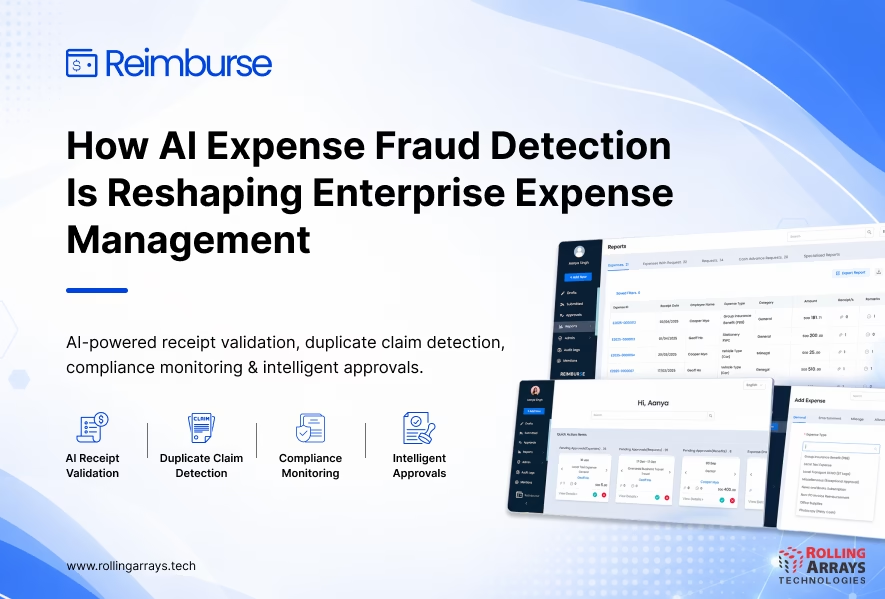
Every expense claim carries more than just a financial transaction. It reflects how effectively an organization manages compliance, governance, and operational efficiency. As expense volumes grow, finance teams need faster ways to validate claims, enforce policies, and identify exceptions without increasing manual effort. AI expense fraud detection is helping organizations strengthen these processes by improving visibility, supporting consistent decision making, and reducing routine administrative work. Organizations that combine AI with strong governance can build expense management processes that are more transparent, scalable, and resilient while keeping finance teams in control of every critical decision.
AI Is Changing More Than Expense Processing
Enterprise expense management has traditionally depended on manual reviews, policy interpretation, and post-approval audits.
While these approaches remain important, they often struggle to keep pace with growing organizations. Global workforces, hybrid working models, business travel, and increasingly complex reimbursement policies have created an environment where finance teams must review thousands of claims every month.
The challenge is no longer limited to processing expenses faster.
- How do we identify duplicate claims before reimbursement?
- How do we enforce policies consistently across regions?
- How do we reduce manual reviews without compromising compliance?
- How do we maintain transparency in automated decision making?
Artificial intelligence is helping enterprises answer these questions by supporting finance teams with faster analysis, greater consistency, and data driven decision making.
Rather than replacing finance professionals, AI allows them to focus on exceptions, policy interpretation, and strategic financial oversight.
The Scalability Challenge in Traditional Expense Reviews
Manual expense verification inevitably breaks down at scale. As transaction volumes surge, finance teams relying on manual reviews face operational bottlenecks, delayed reimbursements, and greater compliance risks.
Common operational challenges include:
A mobile-first user experience enables employees to submit expenses wherever work takes them, while OCR receipt scanning reduces manual data entry and improves accuracy. Policy validation helps identify policy exceptions before approval, and real-time claim tracking gives employees and managers greater visibility into claim status. Secure authentication protects sensitive financial and employee information, while configurable approval workflows support organization-specific approval processes.
These challenges do not indicate weaknesses in an organization’s HR or finance platforms. Instead, they reflect the growing complexity of managing expense operations across multiple employees, business units, currencies, and approval structures. Modern enterprises therefore require technologies that assist finance teams by improving accuracy, consistency, and operational visibility.
AI Expense Fraud Detection Is About Governance, Not Just Automation
When people hear the term AI expense fraud detection, they often imagine software replacing finance professionals. The reality is very different.
Responsible AI acts as an intelligent assistant. It continuously evaluates expense data, identifies unusual patterns, highlights policy exceptions, and presents relevant information for human review. This creates a governance model where artificial intelligence supports decision making while finance teams retain full control over approvals.
Instead of reviewing every expense individually, reviewers can prioritize transactions that genuinely require attention. This approach delivers benefits beyond efficiency. It creates a more transparent and consistent expense management process that strengthens governance across the organization.
The Building Blocks of Responsible AI in Expense Management
Organizations should evaluate AI capabilities based on governance, explainability, and operational value rather than automation alone.
Intelligent Receipt Processing
AI-powered Optical Character Recognition (OCR) extracts receipt information automatically, reducing manual data entry while improving consistency.
Duplicate Claim Detection
Machine learning algorithms compare historical expense data to identify potential duplicate submissions before reimbursement occurs.
Policy Validation
AI evaluates submitted expenses against predefined organizational policies and highlights exceptions for reviewer attention.
Exception Prioritization
Instead of reviewing every claim equally, finance teams can focus on transactions that present higher operational or compliance risk.
Continuous Learning
Machine learning models improve over time by recognizing recurring patterns and helping organizations refine policy enforcement as business requirements evolve.
How AI Supports an Enterprise Expense Workflow
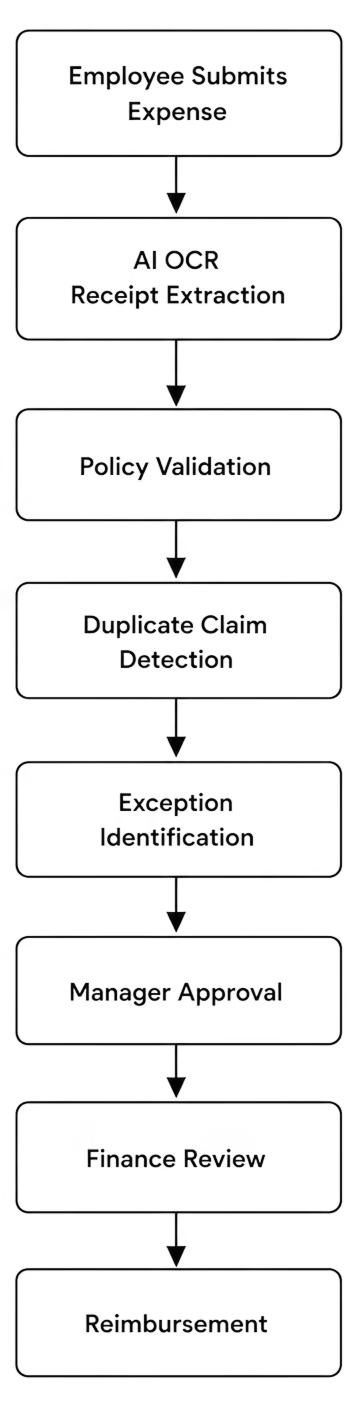
Artificial intelligence should not replace governance. It should strengthen it. Organizations achieve the greatest value when AI improves consistency, reduces manual effort, and provides finance teams with better visibility into expense operations while keeping people responsible for final business decisions.
Machine Learning Is Strengthening Expense Compliance
Compliance is one of the biggest priorities for enterprise finance teams. As organizations expand across countries, business units, and employee groups, expense policies naturally become more detailed. Different travel policies, reimbursement limits, approval hierarchies, and regulatory requirements all add complexity to the review process.
Machine learning helps organizations apply these policies more consistently. Instead of relying solely on manual interpretation, AI can evaluate submitted claims against predefined business rules and historical transaction patterns. It highlights exceptions that require additional review, allowing finance teams to focus their attention where it adds the most value.
The objective is not to automate every decision. The objective is to help reviewers identify potential issues earlier, improve consistency, and reduce administrative effort.
AI Governance Matters More Than AI Alone
As organizations adopt artificial intelligence across finance and HR operations, governance becomes just as important as automation. AI should support responsible decision making by providing transparency into how expense claims are assessed and why certain transactions are flagged for review.
Finance leaders should evaluate AI capabilities against several governance principles:
Transparency helps users understand why claims are flagged for review, while human oversight ensures finance teams make the final approval decisions. Policy consistency ensures business rules are applied uniformly across the organization, and audit readiness keeps every validation and approval traceable. Finally, continuous improvement enables organizations to refine policies as business needs evolve.
These principles help organizations build confidence in AI while maintaining accountability throughout the expense management process.
AI Supports Finance Teams Rather Than Replacing Them
One common misconception is that AI eliminates the need for human expertise. In practice, successful organizations use AI to enhance the capabilities of finance teams rather than replace them.
AI excels at reviewing large volumes of structured information quickly and consistently. Finance professionals continue to provide the business context, judgment, and policy interpretation that technology alone cannot deliver. This balanced approach allows organizations to process routine expense claims more efficiently while ensuring that exceptions receive the attention they deserve.
From Manual Reviews to Intelligent Expense Operations
Enterprise expense management continues to evolve from reactive reviews to proactive governance. Rather than identifying issues after reimbursement, organizations increasingly detect policy exceptions earlier in the process. This improves compliance while creating a better experience for employees who receive faster, more consistent reimbursements.
Building Responsible AI Into Enterprise Expense Management
With 16+ years of experience delivering enterprise HR technology solutions, Rolling Arrays Technologies designs AI-driven solutions that strengthen decision making rather than replace it.
Enterprise AI succeeds when it combines intelligent automation with transparency, governance, and human oversight. Organizations need solutions that help employees submit expenses easily while giving finance teams greater confidence in every reimbursement decision.
This philosophy shapes how Rolling Arrays Technologies designs AI first HR technology solutions. Rather than focusing solely on automation, the focus is on capabilities that strengthen operational visibility, improve policy compliance, and reduce manual effort without introducing unnecessary complexity.
Responsible AI should create trust across the organization. Employees should understand the process. Finance teams should retain control over approvals. Leadership should gain clearer operational insights to support better business decisions.
How This Approach Applies to Enterprise Expense Management
Modern expense management solutions increasingly combine AI with configurable business rules to support finance operations throughout the expense lifecycle. Examples include:
AI-Assisted Receipt Data Extraction
Using OCR to automatically extract and validate receipt data, reducing manual entry and accelerating claim submission.
Intelligent Policy Validation
Evaluating submitted claims against organizational rules to flag exceptions before they reach an approver.
Duplicate Claim Detection
Comparing submissions against historical data to identify and surface potential duplicates before reimbursement.
Configurable Approval Workflows
Routing claims automatically through multi-level approval structures based on organizational rules.
Audit-Ready Records
Maintaining complete, traceable records of every validation and approval decision to support internal and external audits.
The Future of Expense Management Will Balance AI and Human Expertise
Artificial intelligence will continue to reshape enterprise finance operations. However, organizations that achieve the greatest long-term value will not simply automate existing processes. They will redesign expense management around transparency, governance, and better decision making.
Successful finance teams will increasingly use AI to identify patterns, strengthen compliance, and improve operational visibility while continuing to rely on experienced professionals for business judgment and policy oversight. That combination of intelligent technology and human expertise will define the next generation of enterprise expense management.
Key Takeaways
- AI expense fraud detection helps organizations strengthen expense compliance through consistent policy validation.
- Machine learning supports finance teams by identifying unusual transactions and duplicate claims earlier.
- Responsible AI combines automation with transparency, governance, and human oversight.
- Enterprise organizations should evaluate AI based on business value, explainability, and operational trust rather than automation alone.
- Organizations looking to modernize enterprise expense management should evaluate how responsible AI, intelligent automation, and policy-driven governance can strengthen compliance while simplifying finance operations.
Explore how Reimburse brings these capabilities together in a unified enterprise expense management solution.
Frequently Asked Questions
What is AI expense fraud detection?
AI expense fraud detection uses artificial intelligence and machine learning to analyze expense claims, identify unusual patterns, detect duplicate submissions, and support finance teams in validating claims more efficiently. Rather than replacing human reviewers, AI helps prioritize exceptions that require additional attention.
How does machine learning improve expense compliance?
Machine learning continuously analyzes historical expense data and organizational policies to identify inconsistencies, duplicate claims, and policy exceptions. Over time, it helps organizations apply compliance rules more consistently while reducing manual effort.
Can AI prevent expense fraud completely?
No. AI significantly strengthens expense fraud prevention by identifying anomalies, duplicate claims, and policy exceptions early in the process. However, effective governance still requires human oversight, clearly defined policies, and regular audits to support sound business decisions.
Why is AI becoming important in enterprise expense management?
As organizations process larger volumes of expense claims across multiple locations and business units, manual reviews become increasingly difficult to scale. AI improves operational visibility, accelerates validation, and helps finance teams focus on high-risk transactions while maintaining governance.
What should organizations consider before adopting AI for expense management?
Organizations should evaluate AI based on transparency, governance, explainability, security, integration capabilities, and human oversight. Responsible AI should enhance decision making while ensuring finance teams retain control over approvals and compliance.
How does AI support expense audit automation?
AI can automatically organize supporting documents, validate policy compliance, identify exceptions, and maintain audit trails that simplify internal reviews and external audits. This helps organizations improve accuracy while reducing administrative effort.



One Comment