
CHROs have access to more workforce data than ever, yet preparing a board level HR report remains a difficult task. The challenge is not a lack of metrics. It is knowing which metrics matter, connecting them to business priorities, and turning them into a clear story for executive decision making.
A board does not need a long list of HR numbers. It needs a focused view of workforce performance, emerging risks, talent priorities, and the decisions that require leadership attention.
This is where strategic HR analytics can help CHROs move from reporting HR activity to communicating workforce intelligence.
The CHRO Problem Is Not a Lack of HR Data
Enterprise HR functions generate data across recruitment, employee performance, compensation, learning, engagement, attendance, skills, mobility, and attrition.
Yet having this information does not automatically make board reporting easier.
A CHRO may have to bring together multiple reports to answer a single executive question:
“What is happening with our workforce, and what does it mean for the business?”
The difficulty increases when HR teams track hundreds of metrics across different functions.
The result can be a board presentation filled with information but lacking a clear executive narrative.
For CHROs, the real challenge is deciding:
- Which workforce metrics deserve board attention?
- Which changes represent a business risk?
- Which workforce trends require leadership action?
- How do talent metrics connect with business priorities?
- What should the organization anticipate next?
This shifts the focus from HR reporting to strategic HR analytics.
What Does the Board Actually Need from HR?
Board members do not need every HR metric.
They need information that helps them understand how the workforce affects business performance, organizational resilience, growth, and risk.
A useful executive HR report should answer five questions:
What is happening?
Show the most important workforce trends and changes.
Why is it happening?
Provide context around the factors influencing those trends.
Where is the organization exposed?
Highlight workforce risks, gaps, and areas that require attention.
What could happen next?
Use predictive workforce analytics to identify emerging trends and potential scenarios.
What decision does leadership need to make?
Connect workforce insights with the actions or investments that require executive consideration.
This structure helps transform an HR analytics dashboard from a collection of charts into an executive decision making tool.
The HR Metrics CHROs Should Consider for Board Reporting
The right HR metrics for CHROs will vary by organization, industry, workforce strategy, and business priorities.
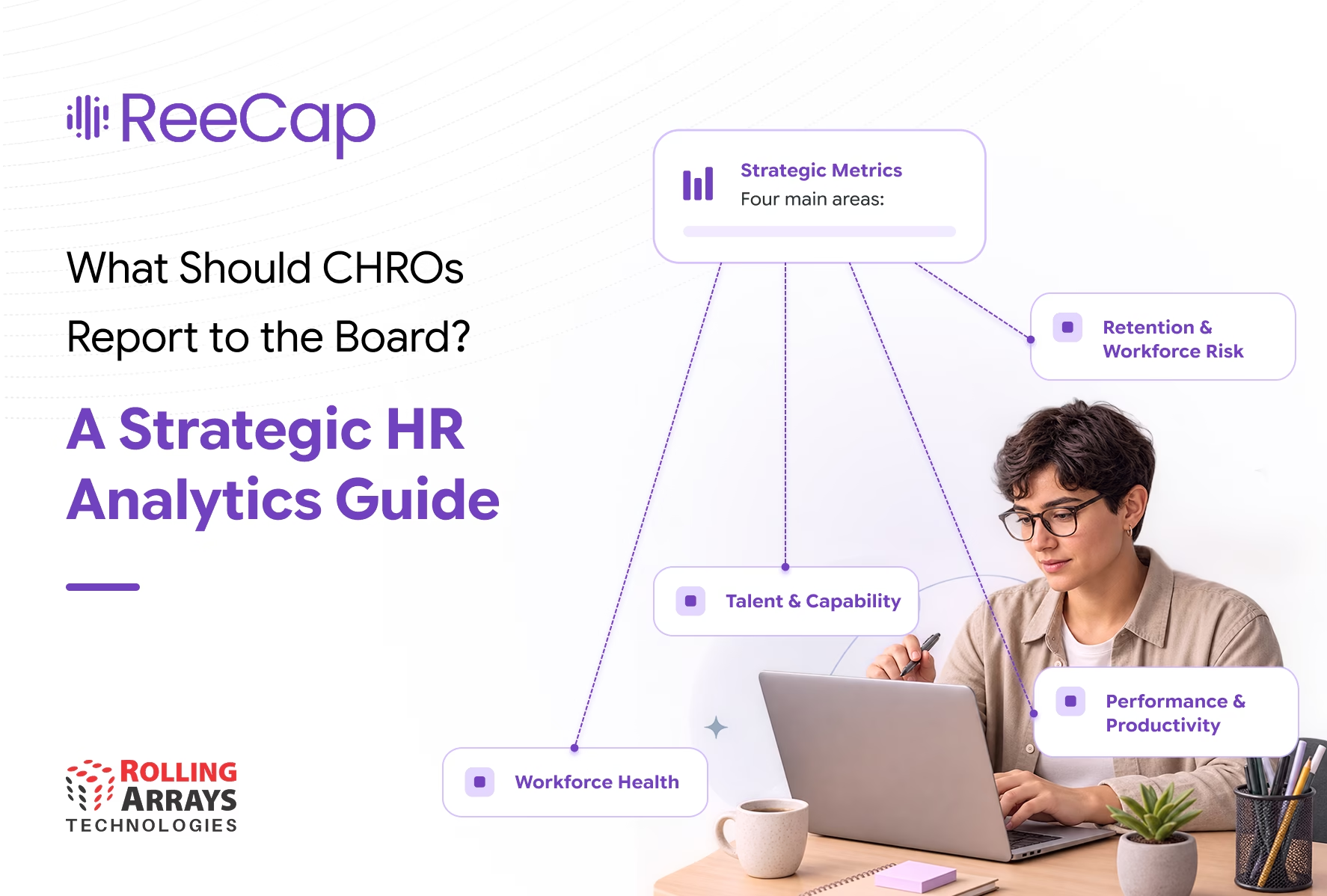
However, enterprise HR reporting can generally organize metrics into several strategic areas.
Workforce Health
Boards may need visibility into:
- Headcount and workforce growth
- Workforce composition
- Attrition
- Retention
- Absence
- Workforce movement
These metrics provide a high level view of the organization’s workforce health.
Talent and Capability
CHROs can highlight:
- Critical skills
- Talent availability
- Learning and development
- Internal mobility
- Succession readiness
- Capability gaps
These metrics help leadership understand whether the organization can support its future business strategy.
Performance and Productivity
Relevant HR metrics can include:
- Performance trends
- Productivity indicators
- Workforce effectiveness
- Performance distribution
- Key workforce segments
The objective is not to present every available performance metric. It is to identify the workforce patterns that matter to business performance.
Retention and Workforce Risk
Retention deserves executive attention when workforce movement can affect critical capabilities, costs, or business continuity.
CHROs can examine:
- Attrition trends
- Retention patterns
- High risk workforce segments
- Critical talent movement
- Factors associated with employee exits
This moves the conversation from “How many employees left?” to “Where are we seeing workforce risk, and what should leadership understand about it?”
Why More HR Metrics Do Not Create Better Board Reports
Enterprise HR teams can easily fall into a reporting trap.
When executives ask for more workforce visibility, teams may respond by adding more metrics, charts, and dashboards.
The report becomes larger.
The decision does not necessarily become clearer.
A board level report should prioritize signal over volume.
For example, instead of presenting ten separate retention metrics, a CHRO could bring together:
Retention trend → affected workforce segments → contributing factors → potential future impact → leadership consideration
This creates a narrative around the metric.
The same principle applies across compensation, performance, skills, recruitment, and workforce planning.
The goal of HR analytics for executives is not to show everything HR knows.
It is to show what leadership needs to understand.
Connect Workforce Metrics to Business Questions
The strongest executive HR reports start with business questions rather than available data.
Consider a business preparing for rapid expansion.
The CHRO may need to answer:
Do we have the talent and skills required to support growth?
That question could lead to analysis of:
- Workforce capacity
- Critical skills
- Hiring trends
- Internal mobility
- Learning activity
- Talent availability
Similarly, if the business faces rising employee turnover, the question becomes:
Where could workforce attrition create business risk?
The analysis could examine:
- Attrition trends
- Critical roles
- Workforce segments
- Performance
- Compensation
- Tenure
- Other relevant workforce factors
This approach makes workforce analytics more strategic because it starts with the business problem.
Move from Historical Reporting to Forward Looking HR Analytics
Traditional HR reporting often focuses on what already happened.
Boards increasingly need HR leaders to discuss what may happen next.
A CHRO can use historical and current workforce data to explore questions such as:
- Where could attrition increase?
- Which workforce segments may require attention?
- Where could skills gaps affect growth?
- What workforce trends should leadership monitor?
- Where should the organization strengthen its talent pipeline?
Predictive and prescriptive analytics can help HR leaders move from retrospective reporting toward forward looking workforce intelligence.
This does not replace executive judgment. It gives leaders additional evidence to consider when making workforce decisions.
Build an Executive HR Analytics Dashboard That Tells a Story
An HR analytics dashboard becomes more valuable when it helps executives move through a logical story.
A board ready dashboard could follow this structure:
1. Workforce Snapshot
A concise view of the organization’s current workforce position.
2. Strategic Workforce Trends
The major changes that leadership should understand.
3. Workforce Risks and Opportunities
The areas that could influence business priorities.
4. Forward Looking Insights
Emerging trends and predictive signals.
5. Leadership Focus Areas
The workforce issues that may require decisions, investment, or further investigation.
This structure helps prevent dashboards from becoming collections of disconnected metrics.
How ReeCap Helps CHROs Build Board Ready Workforce Intelligence
The challenge for CHROs is not simply creating another dashboard.
It is turning workforce data into an executive level narrative without requiring HR teams to spend excessive time collecting, preparing, and interpreting information.
ReeCap addresses this challenge through AI first talent analytics built for SAP SuccessFactors.
It can analyze workforce data, generate dashboards and visualizations, identify trends, and create boardroom ready reports and storyboards.
This creates a more connected journey:
Workforce Data → Analysis → Insights → Narrative → Executive Decision
Instead of manually assembling information from multiple reports, HR leaders can use an AI powered analytics experience to explore workforce questions and create meaningful executive insights.
From HR Reporting to Executive Workforce Intelligence
ReeCap helps organizations build on their existing SAP SuccessFactors investment by turning workforce data into a more accessible analytics experience.
Its capabilities include analytics across areas such as workforce demographics, talent acquisition, attendance, learning, performance, engagement, rewards, skills, and employee exits.
For CHROs, the value comes from connecting these workforce signals.
For example, an executive discussion about retention can move beyond a single attrition percentage and explore relevant workforce segments, historical patterns, and predictive signals.
This helps HR leaders create a more complete view of workforce performance and risk.
What a Board Ready HR Report Should Ultimately Deliver
A successful board report should leave leadership with a clear understanding of:
Where we are.
What has changed.
Why it matters.
What could happen next.
Where leadership should focus.
That is the difference between reporting HR metrics and delivering strategic HR analytics.
For enterprise organizations, workforce data represents a significant strategic asset. The CHRO’s role is to translate that information into a clear perspective that helps leadership understand workforce priorities and make informed decisions.
ReeCap supports this shift by combining AI first analytics, workforce insights, predictive capabilities, visualizations, and executive ready reporting on top of SAP SuccessFactors data.
Key Takeaways
- HR metrics for CHROs should focus on workforce trends, risks, capabilities, and business priorities rather than simply reporting HR activity.
- An effective HR analytics dashboard should help executives understand what is happening, why it matters, and what could happen next.
- Strategic HR analytics connects workforce data with the business questions that matter to leadership.
- Predictive workforce analytics can help CHROs move from historical reporting toward forward looking workforce intelligence.
- ReeCap helps transform SAP SuccessFactors workforce data into AI driven insights, dashboards, visualizations, and boardroom ready reports.
- The goal is not to give the board more HR data. It is to give leadership clearer workforce intelligence for better decisions.
Frequently Asked Questions
What HR metrics should CHROs report to the board?
CHROs can focus on metrics that provide visibility into workforce health, talent and capabilities, performance, retention, workforce risk, and future workforce needs. The specific metrics should reflect the organization’s business strategy and workforce priorities.
What is strategic HR analytics?
Strategic HR analytics uses workforce data to answer business relevant questions, identify important trends and risks, and support workforce and business decisions. It moves beyond reporting historical HR activity toward deeper workforce intelligence.
What should an HR analytics dashboard include?
An executive HR analytics dashboard can include a concise workforce snapshot, strategic workforce trends, key risks and opportunities, forward looking insights, and areas requiring leadership attention.
How can CHROs make HR reporting more relevant to executives?
CHROs can connect workforce metrics to business questions and explain why a trend matters, where it creates risk or opportunity, and what leadership may need to consider. This creates a more decision focused approach to HR reporting.
How does ReeCap support executive HR reporting?
ReeCap uses AI first talent analytics to analyze SAP SuccessFactors workforce data and generate dashboards, visualizations, insights, reports, and storyboards that help HR leaders communicate workforce intelligence to business leadership.
Can ReeCap help create board ready HR reports?
ReeCap provides automated dashboards, reports, visualizations, and storyboards designed to help HR leaders communicate workforce insights in an executive ready format.


