

Instructor-led training remains an important part of employee development, combining structured instruction with direct interaction, practical learning, and collaboration. Organizations use classroom, virtual, and hybrid sessions to support compliance, technical skills, leadership development, and other workforce capabilities.
Managing these programs involves more than scheduling a course. HR and Learning teams need to coordinate instructors, learners, attendance, completion, facilities, and learning records. This guide explains the key elements of instructor-led training management in SAP SuccessFactors Learning and how organizations can streamline these activities for more efficient learning operations.
What Is Instructor-Led Training?
Instructor-led training refers to learning sessions where an instructor guides employees through a structured training program. The session can take place in a physical classroom, through a virtual platform, or through a combination of both.
Organizations commonly use instructor-led training for:
- Compliance and regulatory programs
- Technical and professional skills
- Leadership development
- Product training
- Sales enablement
- Safety programs
- Workshops and practical learning
Unlike self-paced learning, ILT requires organizations to coordinate multiple participants and operational activities around a specific training session.
That makes effective instructor-led training management essential for a smooth learning experience.
How SAP SuccessFactors Learning Supports Instructor-Led Training
SAP SuccessFactors Learning provides organizations with a centralized environment for managing learning activities and learner records.
For instructor-led programs, learning teams can manage important elements such as:
- Learning courses and programs
- Classes and scheduled sessions
- Learner registration
- Instructor information
- Learning assignments
- Completion records
- Learner history
- Training reporting
This centralized approach helps organizations connect learning activities with employee development goals.
However, effective ILT management requires teams to coordinate activities beyond the basic course record.
The Key Stages of Instructor-Led Training Management
Organizations can manage ILT more effectively by considering the entire training lifecycle.
1. Plan the Training Program
Every successful training program starts with clear planning.
Learning teams should define:
- Training objectives
- Target learner groups
- Course requirements
- Training dates
- Delivery format
- Instructor requirements
- Facilities and resources
Good planning helps organizations align training programs with broader training and development in HRM objectives.
2. Create and Schedule Training Sessions
Once the organization defines the training requirements, administrators can create and schedule the relevant learning sessions.
For classroom training, teams may need to coordinate:
- Training rooms
- Session timings
- Seating capacity
- Instructors
- Equipment
- Learning materials
Virtual and hybrid programs add another layer of coordination around digital meeting platforms and learner access.
A structured scheduling process helps teams manage training resources while avoiding unnecessary conflicts.
3. Manage Learner Registration
Learner registration forms another important part of employee training management.
Learning teams need visibility into:
- Registered learners
- Available seats
- Session capacity
- Waitlists
- Learner eligibility
- Training assignments
Clear registration processes help employees understand their training schedules and allow administrators to manage session capacity effectively.
4. Track Attendance Accurately
Attendance plays a critical role in instructor-led training.
Organizations need to know whether employees actually attended the sessions assigned to them. This becomes particularly important when attendance determines course completion or supports mandatory training requirements.
Many organizations still use:
- Paper sign-in sheets
- Excel spreadsheets
- Manual attendance lists
- Email confirmations
- Manual data entry
These approaches create additional administrative work and can introduce errors into learner records.
A digital attendance process can simplify this step significantly.
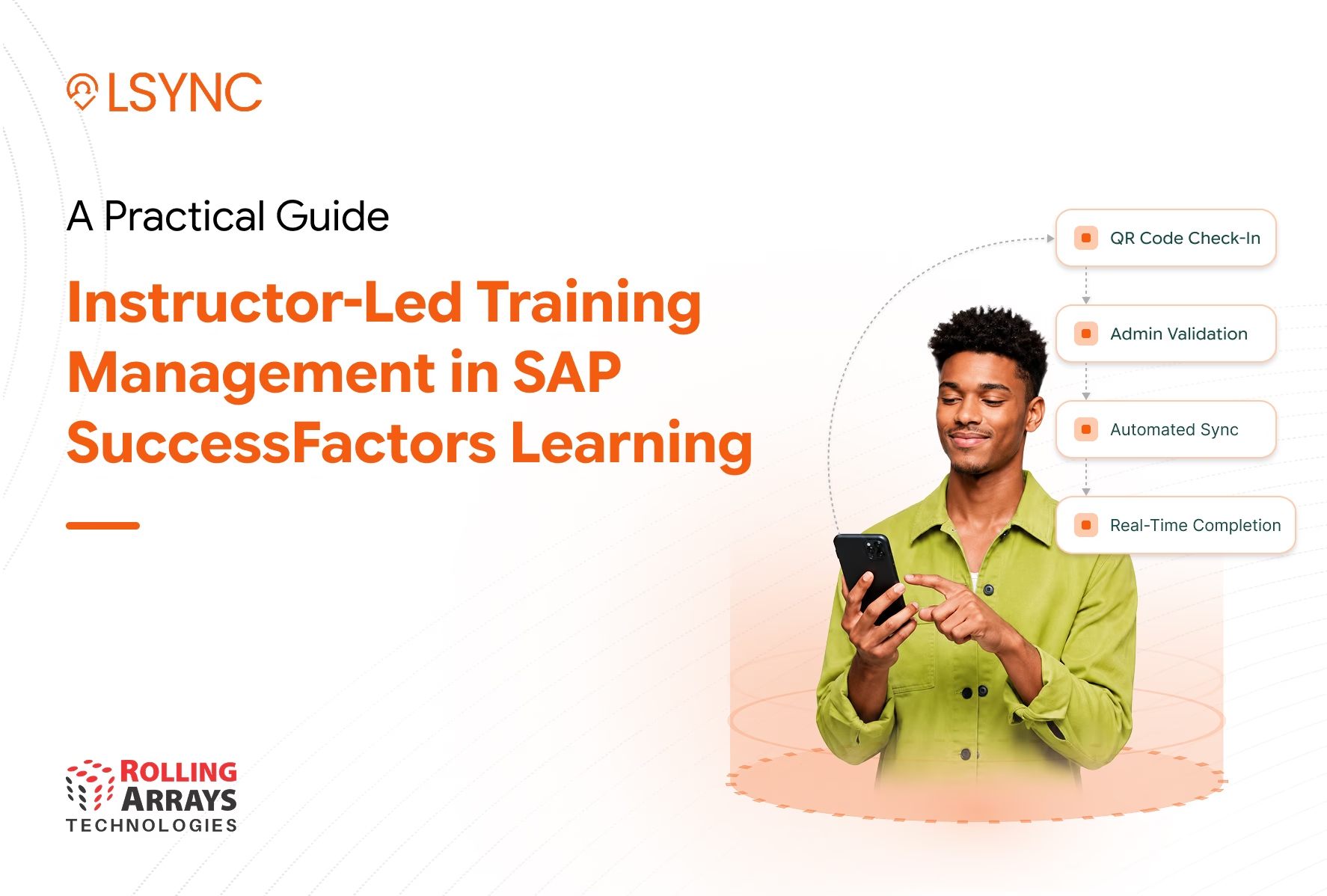
For example, QR-based attendance allows learners to check in through their mobile devices while training teams capture attendance digitally.
This approach reduces manual entry and creates a more efficient connection between actual learner participation and the organization’s learning records.
5. Validate Attendance and Update Completion
Attendance capture represents only one part of the process.
Training teams may also need to review and validate attendance before updating the learner’s completion status.
An effective process should help administrators:
- Review attendance records
- Verify learner participation
- Apply attendance rules
- Approve or reject attendance
- Update course completion
- Maintain accurate learner history
When teams connect these activities, they can reduce the gap between training participation and LMS records.
6. Monitor Learner Progress
Training teams need visibility after the session ends.
Learner progress tracking can help organizations understand:
- Who completed the training
- Who attended but still requires completion
- Which learners missed a session
- Which programs have outstanding requirements
- How training participation changes over time
Reliable progress data also supports managers and HR teams when they evaluate employee development programs.
7. Manage Training Resources
ILT management also involves operational coordination.
For classroom and hybrid programs, teams may need to manage:
- Rooms
- Seating
- Equipment
- Training calendars
- Instructors
- Other session resources
When teams manage these activities separately, they spend more time coordinating information across different tools.
A connected learning operations approach can bring these activities together and reduce administrative coordination.
Why Time Management Matters in Employee Training
Time management training for employees represents one example of how organizations use instructor-led learning to develop workforce capabilities.
However, organizations also need to manage their own time effectively when delivering these programs.
Manual attendance entry, learner reconciliation, completion updates, and training coordination can consume significant administrative time.
Automating repetitive activities allows L&D teams to spend more time on:
- Learning strategy
- Program design
- Employee development
- Instructor engagement
- Training effectiveness
Effective employee training management therefore requires organizations to consider both learner time and administrative time.
How Organizations Can Improve ILT Management
Organizations looking to improve their instructor-led training operations should focus on several areas:
Digitize Attendance
Replace paper-based sign-ins with digital attendance capture to reduce manual work and improve data accuracy.
Connect Attendance with Learning Records
Synchronize validated attendance with SAP SuccessFactors Learning so learner history reflects actual participation.
Automate Completion Tracking
Use automated workflows to update course completion based on verified attendance and configured training rules.
Centralize Training Operations
Bring attendance, learner management, facilities, instructors, and training workflows into a connected learning operations process.
Maintain Audit-Ready Records
Maintain accurate attendance history, validation records, and activity logs to support compliance and reporting requirements.
How LSYNC Enhances Instructor-Led Training Management
LSYNC extends SAP SuccessFactors Learning with capabilities that help organizations digitize attendance and streamline learning operations.
QR-Based Attendance
LSYNC enables learners to check in using QR codes, helping training teams capture attendance quickly without paper-based processes.
Attendance Validation
Training administrators can review and validate attendance before synchronizing records with SAP SuccessFactors Learning.
Automated Learning Synchronization
LSYNC synchronizes validated attendance and completion status with SAP SuccessFactors Learning, helping organizations maintain accurate learner records.
Learning Operations Management
Organizations can also use LSYNC to manage training workflows, facilities, resources, instructors, and other operational activities from a connected platform.
Key Takeaways
- Instructor-led training remains an important part of employee development.
- Effective ILT management involves much more than scheduling training sessions.
- Attendance accuracy directly affects learner records, completion tracking, and compliance.
- Digital attendance can reduce manual administration and improve learning data accuracy.
- Connecting attendance with SAP SuccessFactors Learning creates a more streamlined learning operation.
- Solutions such as LSYNC can extend SAP SuccessFactors Learning with automated attendance and learning operations capabilities.
Frequently Asked Questions
What is instructor-led training?
Instructor-led training involves an instructor guiding employees through a structured learning session. Organizations can deliver ILT in classroom, virtual, or hybrid formats.
What does instructor-led training management involve?
Instructor-led training management covers the complete training lifecycle, including planning, scheduling, learner registration, attendance tracking, completion management, progress monitoring, and resource coordination.
How does SAP SuccessFactors Learning support instructor-led training?
SAP SuccessFactors Learning helps organizations manage courses, classes, learner registration, instructors, learning assignments, completion records, learner history, and training reporting.
Why does attendance matter in instructor-led training?
Accurate attendance helps organizations verify learner participation, maintain reliable learning records, track completion, and support compliance requirements.
How can organizations automate ILT attendance?
Organizations can use digital attendance solutions such as QR-based check-ins to capture learner attendance, validate participation, and synchronize attendance records with SAP SuccessFactors Learning.
What is LSYNC?
LSYNC is a learning operations and attendance management extension for SAP SuccessFactors Learning that helps organizations automate attendance tracking, validation, synchronization, and training administration.


