

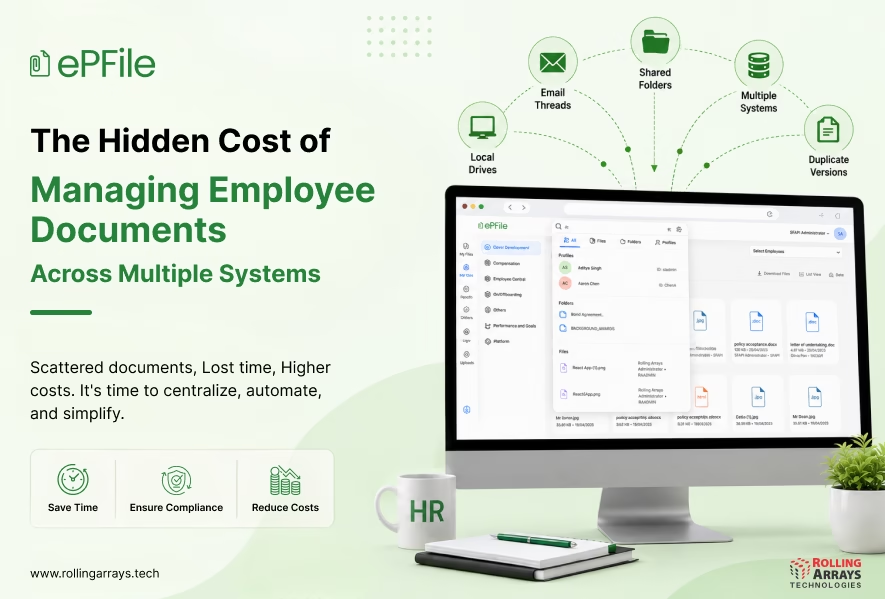
HR teams depend on employee documents every day, from offer letters and employment contracts to salary revisions and policy acknowledgements. Yet in many organizations, these documents remain scattered across shared folders, email threads, local drives, and multiple business applications. This fragmented approach increases the employee document management cost by slowing document retrieval, creating duplicate records, and adding unnecessary administrative effort. This article explores the hidden operational costs of managing HR documents across multiple systems and how centralized digital document management helps organizations improve efficiency, governance, and employee experience.
Why HR Teams Lose Time Managing Documents Across Multiple Systems
When these documents are spread across multiple systems, simple tasks often require additional effort.
Examples include:
- Searching shared folders for historical records
- Retrieving documents from email conversations
- Managing different document versions
- Coordinating approvals across multiple applications
- Verifying the latest employee document before sharing
Industry research from SER Group indicates that HR departments spend a significant portion of their working hours searching for documents, highlighting how fragmented document management can reduce operational efficiency.
As organizations continue to grow, these manual activities become increasingly difficult to manage consistently.
Where the Hidden Costs Begin
The financial impact of fragmented document management extends beyond storage costs. It affects productivity, compliance, collaboration, and employee experience across the organization.
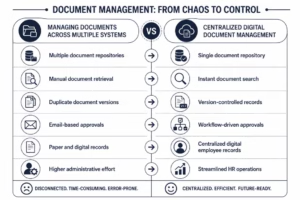
While each task may appear minor on its own, the cumulative impact across thousands of employee documents can significantly increase operational costs.
Hidden Costs of Fragmented Document Management
The Operational Impact of Fragmented HR Document Management
As organizations expand across departments, locations, and countries, document management becomes more complex. Some of the most common operational challenges include:
Increased Administrative Effort
HR professionals spend valuable time locating documents, validating versions, coordinating approvals, and responding to employee requests instead of focusing on strategic initiatives.
Slower Decision Making
Managers often require quick access to employee documentation during promotions, transfers, audits, or workforce planning. Delays in retrieving documents slow important HR decisions.
Greater Compliance Complexity
Documents stored across different systems make it more difficult to maintain consistent access controls, document retention policies, approval history, and audit trails.
Inconsistent Employee Experience
Employees expect quick access to employment letters, salary certificates, and historical HR documents. Fragmented document management often results in longer response times and additional HR support requests.
Organizations are increasingly addressing these challenges by centralizing document management and integrating document workflows within their existing HR systems.
Why Organizations Are Moving Toward Centralized Document Management
Managing employee documents within a centralized environment helps HR teams reduce administrative effort while improving operational visibility, compliance, and employee experience.
Instead of managing documents across multiple applications, organizations are bringing document generation, approvals, storage, and retrieval into a single, structured workflow.
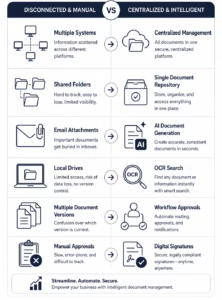
Centralized Employee Document Repository
- Eliminate duplicate document storage
- Improve document consistency
- Reduce time spent searching for records
- Maintain better version control
With all employee documents in one place, HR teams can retrieve information quickly and respond more efficiently to employee requests and business needs.
AI-Powered Document Generation
Organizations can automate:
- Offer letters
- Employment contracts
- Promotion letters
- Salary revision letters
- Confirmation letters
- Exit documentation
This improves consistency while significantly reducing manual document preparation
OCR-Powered Search
Searching for documents by folder name or file title becomes increasingly difficult as document volumes grow. OCR (Optical Character Recognition) enables HR teams to search documents using employee names, keywords, or document content, making document retrieval faster and more accurate.
Instead of spending time browsing multiple repositories, HR professionals can locate the required document within seconds.
Workflow-Driven Approvals
- Standardize approval processes
- Track document status
- Maintain approval history
- Reduce email-based coordination
This creates a more transparent and efficient document approval process.
Digital Signature Integration
- Accelerate document approvals
- Maintain secure signature records
- Improve document traceability
- Support remote and hybrid workforces
Digital approval workflows also strengthen compliance by maintaining a complete audit history for every signed document.
Why Native Integration Makes a Difference
Many organizations already manage employee information within SAP SuccessFactors and other enterprise HR platforms. Rather than introducing another disconnected application, they extend their existing HR environment with native document management capabilities. Native document management provides several advantages:
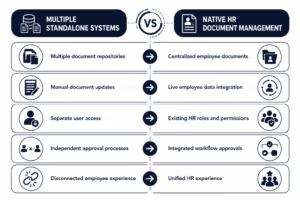
By extending their existing HR systems, organizations can simplify employee document management while preserving familiar HR processes and improving operational efficiency.
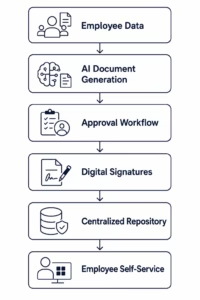
Employee Document Lifecycle
Extending SAP SuccessFactors with ePFile
ePFile by Rolling Arrays Technologies extends SAP SuccessFactors with intelligent document management capabilities, helping HR teams:
- Generate employee documents using AI-powered templates
- Store documents in a centralized repository
- Search documents instantly using OCR
- Automate document approval workflows
- Enable secure digital signatures
- Strengthen document governance and compliance
By bringing document generation, approvals, storage, retrieval, and governance into one connected environment, organizations can reduce the hidden operational costs of managing HR documents across multiple systems while improving employee experience and compliance.
Business Benefits of Centralized Employee Document Management
Organizations that centralize employee document management often realize measurable improvements across HR operations, compliance, and employee experience. By reducing dependence on multiple systems, HR teams can focus more on strategic initiatives and less on administrative work.
Reduced Administrative Effort
Managing employee documents from a single repository minimizes the time spent searching for files, validating document versions, and coordinating approvals across different systems.
Faster Document Retrieval
OCR-powered search enables HR teams to locate employee documents instantly using employee names, keywords, or document content, reducing delays in responding to employee requests, audits, and business operations.
Improved Compliance and Governance
Centralized document management strengthens governance by maintaining role-based access, document version control, audit trails, and configurable retention policies within a structured environment.
Better Employee Experience
Employees frequently require employment letters, salary certificates, policy documents, and historical records. Providing secure and timely access to these documents improves responsiveness while reducing routine HR support requests.
Scalable HR Operations
As organizations expand across locations and business units, standardized document workflows help maintain consistency, simplify collaboration, and support long-term business growth.
Managing Documents Across Multiple Systems vs Centralized Document Management
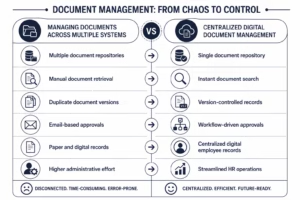
Organizations that centralize document management can reduce operational complexity while creating a more efficient and connected HR environment.
Business Benefits

Conclusion
Managing employee documents across multiple systems often creates hidden operational costs that extend beyond document storage. Fragmented workflows increase administrative effort, slow document retrieval, complicate compliance, and reduce productivity across HR teams.
By centralizing employee document management, organizations can streamline document generation, approvals, retrieval, and governance while improving employee experience and operational efficiency.
Solutions such as ePFile from Rolling Arrays Technologies help organizations extend SAP SuccessFactors with intelligent document management capabilities, enabling HR teams to manage the complete employee document lifecycle within one connected environment.
Looking to Reduce the Hidden Costs of Managing HR Documents Across Multiple Systems?
Discover how ePFile helps organizations centralize employee documents, automate document generation, streamline approvals, and strengthen document governance within SAP SuccessFactors.
Explore ePFile or connect with our team to learn more.
Frequently Asked Questions About SAP SuccessFactors Document Management
What is the hidden cost of managing HR documents across multiple systems?
Managing HR documents across multiple systems increases administrative effort, slows document retrieval, creates duplicate records, complicates compliance, and reduces overall HR productivity.
How does centralized employee document management improve efficiency?
Centralized employee document management provides a single repository for employee records, enabling faster document retrieval, better version control, streamlined approvals, and improved collaboration across HR teams.
Why is OCR important for HR document management?
OCR (Optical Character Recognition) enables HR teams to search documents using employee names, keywords, or document content instead of manually browsing folders, significantly improving document retrieval efficiency.
How does workflow automation simplify HR document management?
Can organizations modernize document management without replacing SAP SuccessFactors?
Yes. Many organizations extend SAP SuccessFactors with native document management solutions that support AI-powered document generation, OCR search, workflow automation, digital signatures, and centralized document storage while continuing to work within their existing HR environment.
How does ePFile help reduce employee document management costs?
ePFile by Rolling Arrays Technologies helps organizations reduce employee document management costs by centralizing employee records, automating document generation, enabling OCR-powered search, supporting workflow-driven approvals, integrating digital signatures, and strengthening document governance within SAP SuccessFactors.



One Comment