
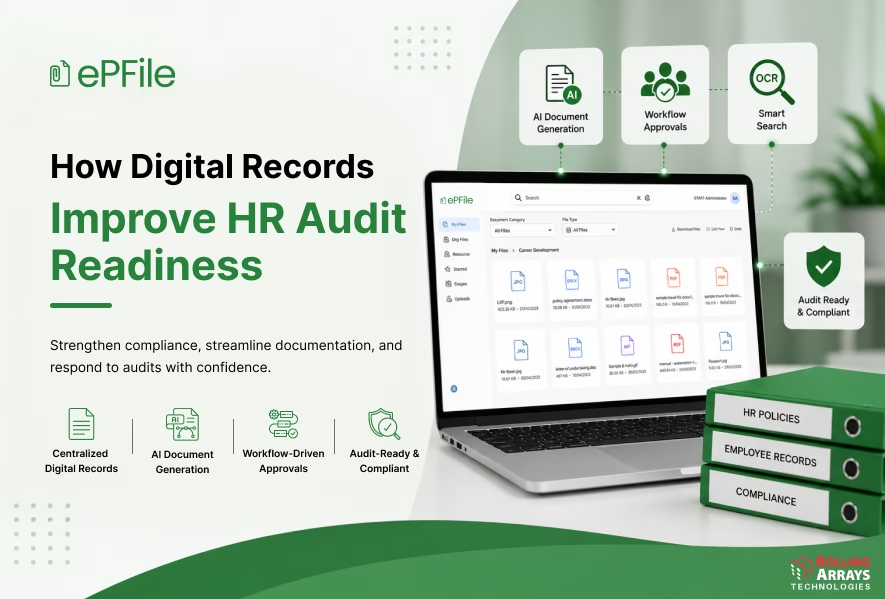
HR audits rarely fail because organizations lack policies. More often, challenges arise when supporting documents are difficult to retrieve, approvals are incomplete, or employee records are stored across multiple locations. As compliance expectations continue to evolve, organizations are strengthening HR audit documentation compliance by adopting centralized digital employee records and structured document management. This article explores the common documentation challenges HR teams face during audits and how modern employee records management helps improve audit readiness without disrupting existing HR systems.
HR Audits Depend on Documentation as Much as Policy
Most organizations invest significant effort in developing HR policies, compliance frameworks, and governance processes. However, successful HR audits depend not only on having the right policies but also on demonstrating that every employee document is complete, accurate, and easily accessible.
During an audit, HR teams are commonly asked to provide:
- Employment contracts
- Offer letters
- Promotion letters
- Salary revision letters
- Performance records
- Policy acknowledgements
- Exit documentation
- Approval history
When these documents are spread across shared folders, email attachments, paper files, or multiple storage locations, preparing for an audit becomes significantly more time-consuming.
A centralized employee records management approach helps HR teams retrieve supporting documentation quickly while maintaining consistency across every stage of the employee lifecycle.
Common Documentation Challenges During HR Audits
As organizations grow, document management often becomes more complex.
Some of the most common challenges include:
These challenges do not necessarily indicate poor HR policies. Instead, they often reflect the need for more structured document governance and employee records management.
Why HR Audit Documentation Compliance Is Becoming More Important
Regulatory expectations continue to evolve across industries and regions. HR teams are expected to maintain accurate employee records, demonstrate document integrity, and provide supporting documentation whenever required.
Modern compliance requirements often include:
- Secure document storage
- Role-based access controls
- Complete approval history
- Document retention policies
- Audit trails
- Fast document retrieval
- Consistent document governance
Organizations that maintain digital employee records are often better positioned to respond efficiently to internal reviews, external audits, and regulatory requests.
Rather than spending valuable time locating documents, HR teams can focus on validating information and supporting audit processes with confidence.
Building an Audit-Ready Employee Records Management Strategy
Preparing for an HR audit should not begin when an audit notice arrives. Organizations that maintain structured employee records throughout the employee lifecycle are better positioned to respond quickly while reducing administrative effort.
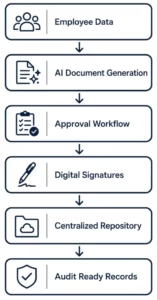
Modern employee records management focuses on creating a consistent, secure, and traceable document ecosystem rather than simply storing employee files.
Building an Audit-Ready Employee Records Management Strategy
Centralized Digital Employee Records
This improves:
- Document visibility
- Version control
- Record consistency
- Faster audit preparation
AI-Powered Document Generation
Modern HR document management solutions automate document generation using employee data and predefined templates. This helps ensure that offer letters, promotion letters, salary revisions, and other employee documents remain accurate and consistent across the organization.
Benefits include:
- Reduced manual effort
- Standardized document formats
- Faster document creation
- Improved document accuracy
Three capabilities are non-negotiable for enterprise expense compliance. Each one maps directly to a cost above.
Workflow-Driven Approvals
Workflow-driven approvals provide:
- Configurable approval processes
- Approval history
- Status tracking
- Complete audit trails
This creates greater transparency while simplifying compliance reporting.
OCR-Powered Document Search
Finding the right document during an audit should take seconds, not hours.
OCR (Optical Character Recognition) enables HR teams to search employee records using document content, employee names, keywords, or metadata instead of manually navigating folders.
Fast document retrieval improves productivity while reducing the stress often associated with audit preparation.
Digital Signatures
Digital signature integration provides:
- Secure signing workflows
- Signature history
- Faster document completion
- Better document traceability
These capabilities help organizations maintain compliant document workflows without relying on paper-based approvals.
What Modern Audit-Ready Document Management Looks Like
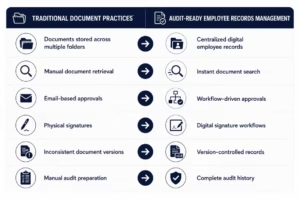
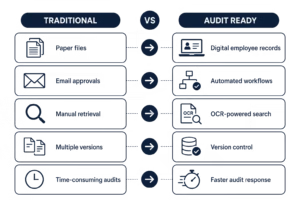
Traditional audit preparation often relies on manual document collection, searching through multiple folders, paper-based approvals, spreadsheet tracking, maintaining multiple document versions, and conducting manual compliance reviews. In contrast, modern employee records management centralizes documents in a single repository, enables fast retrieval with OCR-powered search, replaces paper approvals with digital approval workflows, maintains automated audit trails, ensures version-controlled records, and strengthens compliance through structured document governance. This modern approach improves efficiency, enhances accuracy, and simplifies audit readiness while reducing administrative effort.
Organizations that adopt structured employee records management can simplify audit preparation while improving document accuracy and governance across HR operations.
Extending HR Systems with Intelligent Document Management
Many organizations already manage employee information through SAP SuccessFactors and other HR platforms. As compliance requirements evolve, they often look for ways to strengthen document governance without changing their existing HR systems.
Solutions such as ePFile by Rolling Arrays Technologies extend HR document management by supporting:
- AI-powered document generation
- Centralized employee records
- OCR-based document search
- Workflow-driven approvals
- Digital signature integration
- Secure document storage
- Audit-ready document governance
By managing the complete employee document lifecycle within an integrated environment, HR teams can improve compliance, simplify audits, and reduce administrative effort while continuing to work within their existing HR platform.
Traditional vs Audit-Ready HR Documentation
Business Benefits of Audit Ready Employee Records Management
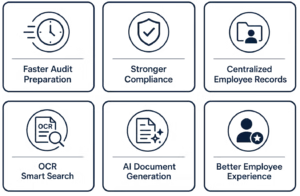
When employee documents are centralized and searchable, HR teams spend less time locating records and more time supporting the audit process. This helps organizations respond to internal reviews and external audits with greater confidence.
Reduced Audit Preparation Time
Administrators define custom fields, approval paths, and conditional logic. Reimburse enforces policy systematically, instead of leaving reviewers to interpret it case by case.
Stronger Compliance and Governance
HR teams often need immediate access to employee records during audits, investigations, or compliance reviews. OCR-powered document search enables authorized users to locate documents within seconds, reducing manual effort and improving operational efficiency.
Improved Operational Efficiency
Automating document generation, approval workflows, and document retrieval minimizes repetitive administrative tasks, allowing HR teams to focus on strategic workforce initiatives instead of manual document management.
Better Employee Experience
Employees frequently require employment letters, salary certificates, and other HR documents. Digital employee records enable faster document access while reducing dependency on HR teams for routine requests.
Traditional HR Audit Preparation vs Audit Ready Document Management
Traditional HR audit preparation often involves managing documents across folders and emails, manually retrieving records, relying on paper-based approvals, maintaining multiple document versions, tracking compliance manually, and spending significant time preparing for audits. In contrast, audit-ready digital document management centralizes employee records in a secure repository, enables instant retrieval with OCR-powered document search, automates approvals through workflow-driven processes, maintains version-controlled documents, strengthens governance with audit-ready compliance controls, and supports faster, more structured audit responses. This approach simplifies audit preparation while improving efficiency, accuracy, and compliance.
Business Benefits
Conclusion
Successful HR audits depend on more than well-defined policies. They require complete, accurate, and easily accessible employee records that support every stage of the employee lifecycle. As compliance expectations continue to evolve, organizations are strengthening employee records management to improve governance, reduce administrative effort, and simplify audit preparation.
By adopting structured digital document management, HR teams can centralize employee records, automate document workflows, improve document retrieval, and maintain audit-ready documentation without disrupting existing HR systems.
Solutions like ePFile from Rolling Arrays Technologies help organizations extend SAP SuccessFactors with intelligent document management capabilities, enabling HR teams to manage employee documents with greater efficiency, compliance, and confidence.
Preparing for an HR audit starts with better employee records management.
Discover how ePFile helps organizations automate document generation, centralize employee records, strengthen document governance, and simplify audit readiness within SAP SuccessFactors.
Explore ePFile or connect with our team to learn more.
Frequently Asked Questions About SAP SuccessFactors Document Management
What is HR audit documentation compliance?
HR audit documentation compliance refers to maintaining complete, accurate, and accessible employee records that support organizational policies, regulatory requirements, and audit processes. Proper documentation helps organizations demonstrate compliance during internal and external audits.
Why is employee records management important for HR audits?
Employee records management ensures that employment documents, approvals, policy acknowledgements, and other supporting records are securely stored, easy to retrieve, and consistently maintained throughout the employee lifecycle.
How do digital employee records improve audit readiness?
Digital employee records centralize document storage, strengthen document governance, provide audit trails, and enable faster document retrieval, helping HR teams respond more efficiently during audits.
What capabilities should organizations look for in an audit-ready document management solution?
-
- AI-powered document generation
- OCR-enabled document search
- Workflow-driven approvals
- Digital signature integration
- Secure document storage
- Role-based access controls
- Audit-ready document governance
Can organizations improve audit readiness without replacing their HR platform?
Yes. Many organizations extend their existing HR platforms with intelligent document management solutions that strengthen employee records management while continuing to work within their current HR environment.
How does ePFile support HR audit documentation compliance?
ePFile by Rolling Arrays Technologies helps organizations strengthen HR audit documentation compliance through AI-powered document generation, centralized employee records, OCR-powered search, workflow automation, digital signatures, and audit-ready document governance, all within the SAP SuccessFactors environment.



One Comment