

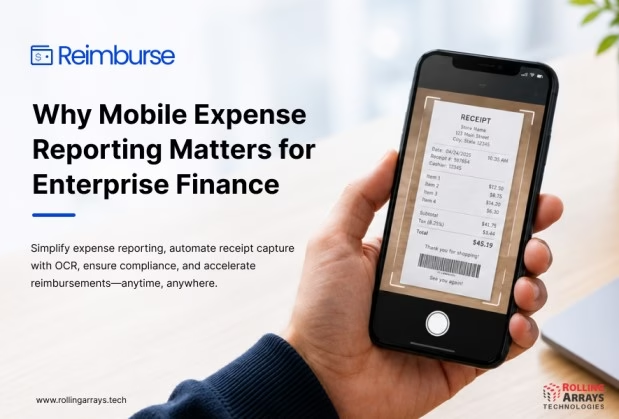
Today’s workforce is more mobile than ever, yet many organizations still rely on paper receipts, manual expense submissions, and disconnected approval processes. These traditional methods slow reimbursements, increase administrative effort, and make it harder for Finance teams to maintain visibility. Mobile expense reporting simplifies the entire process by enabling employees to capture receipts, submit claims, and track approvals from anywhere. Combined with OCR technology and intelligent workflows, organizations can improve efficiency, strengthen compliance, and deliver a better experience for employees and Finance teams alike.
Why Traditional Expense Reporting Creates Unnecessary Delays
Business travel has evolved significantly over the past decade. Employees now work across client locations, airports, manufacturing sites, healthcare facilities, and remote offices. Expense reporting, however, often remains tied to manual processes that were designed for a different way of working.
Many employees still collect paper receipts throughout a trip, store them until they return to the office, and then spend valuable time entering expense details into spreadsheets or web portals. Finance teams then review every claim manually before processing reimbursements.
While these processes may appear manageable, they introduce delays throughout the reimbursement lifecycle.
- Lost or damaged paper receipts.
- Delayed claim submissions after business travel.
- Manual data entry that increases processing time.
- Limited visibility into claim status.
- Higher administrative effort for Finance teams.
As organizations grow, these small delays accumulate into operational inefficiencies that affect both employees and Finance teams.
Mobile expense reporting addresses these challenges by enabling employees to complete expense submissions while work is still in progress rather than after the trip has ended.
How Mobile Expense Reporting Improves the Employee Experience
Employees increasingly expect workplace applications to provide the same convenience they experience in their everyday digital lives.
Expense reporting should be no different.
Instead of collecting receipts for several days and completing reports later, employees can capture receipts immediately, review extracted information, submit claims, and monitor approvals directly from a mobile device.
This reduces administrative effort while giving employees greater visibility throughout the reimbursement process.
Traditional vs Mobile Expense Reporting
| Traditional Expense Reporting | Mobile Expense Reporting |
|---|---|
| Store paper receipts | Capture receipts instantly |
| Enter expense details manually | OCR extracts receipt information |
| Submit claims after returning to the office | Submit expenses from anywhere |
| Email supporting documents | Upload receipts directly through the mobile app |
| Wait for reimbursement updates | Track claim status in real time |
For Finance teams, these improvements translate into cleaner data, faster claim submissions, and more efficient processing.
OCR Is Making Mobile Expense Reporting Smarter
Capturing expenses on a mobile device is only part of the solution.
Modern enterprise expense management also relies on Optical Character Recognition (OCR) to reduce manual effort and improve data accuracy.
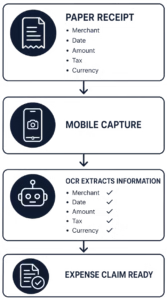
OCR technology automatically extracts key information such as the merchant name, transaction date, currency, tax amount, and total expense directly from a receipt image. Employees no longer need to enter every field manually, allowing them to complete expense submissions in significantly less time.
For Finance teams, OCR improves data consistency while reducing the likelihood of manual entry errors.
More importantly, it creates a standardized expense reporting process that supports faster reviews and stronger policy compliance across the organization.
Instead of spending time validating routine expense details, reviewers can focus on exceptions that genuinely require attention.
How OCR Simplifies Mobile Expense Reporting
What Finance Leaders Should Look for in a Mobile Expense Reporting Solution
Choosing a mobile expense reporting solution involves more than providing employees with a mobile application. The solution should simplify expense reporting while giving Finance teams greater control, visibility, and confidence throughout the reimbursement process.
When evaluating mobile expense reporting capabilities, organizations should consider the following:
A mobile-first user experience enables employees to submit expenses wherever work takes them, while OCR receipt scanning reduces manual data entry and improves accuracy. Policy validation helps identify policy exceptions before approval, and real-time claim tracking gives employees and managers greater visibility into claim status. Secure authentication protects sensitive financial and employee information, while configurable approval workflows support organization-specific approval processes.
A well designed mobile expense reporting solution should support employees in completing expense claims quickly while helping Finance teams maintain governance and compliance.
Mobile Expense Reporting Supports Better Compliance
Speed should never come at the expense of compliance.
As organizations digitize expense management, maintaining consistent policy enforcement becomes increasingly important. Mobile expense reporting solutions should help employees submit complete and accurate claims while supporting Finance teams with standardized validation processes.
Modern expense management platforms combine mobile experiences with configurable business rules that help organizations:
- Reduce incomplete claim submissions.
- Improve visibility across approval workflows.
- Maintain audit ready expense records.
- Strengthen financial governance.
This approach creates a smoother experience for employees while helping Finance teams reduce administrative effort.
Mobile First Experiences Are Shaping the Future of Expense Management
Compliance is one of the biggest priorities for enterprise finance teams. As organizations expand across countries, business units, and employee groups, expense policies naturally become more detailed. Different travel policies, reimbursement limits, approval hierarchies, and regulatory requirements all add complexity to the review process.
Machine learning helps organizations apply these policies more consistently. Instead of relying solely on manual interpretation, AI can evaluate submitted claims against predefined business rules and historical transaction patterns. It highlights exceptions that require additional review, allowing finance teams to focus their attention where it adds the most value.
The objective is not to automate every decision. The objective is to help reviewers identify potential issues earlier, improve consistency, and reduce administrative effort.
Mobile First Experiences Are Shaping the Future of Expense Management
The way employees work continues to evolve.
Field employees, consultants, sales teams, healthcare professionals, engineers, and executives increasingly work away from traditional office environments. They expect workplace technology to support that flexibility.
Mobile expense reporting allows organizations to meet those expectations without compromising operational control.
Instead of waiting until the end of a trip, employees can capture receipts immediately, submit expenses while travelling, and monitor approvals from their mobile devices.
For organizations, this means:
- Faster expense submissions.
- Better data quality.
- Improved operational visibility.
- More efficient reimbursement cycles.
- A better employee experience.
The result is a connected expense management process that supports both workforce mobility and financial governance.
Rolling Arrays Technologies’ Perspective
At Rolling Arrays Technologies, we believe enterprise expense management should support the way people work today.
Mobile experiences are no longer optional features. They have become an important part of creating efficient, connected Finance operations. Organizations benefit most when employees can submit expenses effortlessly while Finance teams maintain visibility, consistency, and control throughout the reimbursement process.
This philosophy shapes how we design AI first HR technology solutions.
Our focus extends beyond digitizing expense claims. We help organizations simplify expense reporting by combining mobile accessibility, intelligent OCR receipt scanning, configurable workflows, and policy aware validation into one connected experience.
This approach is reflected in Reimburse, our AI powered enterprise expense management solution. Employees can capture receipts, submit expenses, and track approvals directly from their mobile devices, while Finance teams benefit from improved visibility, faster processing, and stronger governance across the entire expense lifecycle.
Key Takeaways
- Mobile expense reporting reduces administrative effort for employees and Finance teams.
- OCR technology simplifies receipt capture and improves data accuracy.
- Mobile first experiences help organizations accelerate expense submissions and reimbursements.
- Real time visibility improves operational efficiency throughout the approval process.
- Rolling Arrays Technologies believes connected mobile experiences will continue to shape the future of enterprise expense management.
Explore how Reimburse brings these capabilities together in a unified enterprise expense management solution.
Frequently Asked Questions About SAP SuccessFactors Document Management
What is mobile expense reporting?
Mobile expense reporting allows employees to capture receipts, submit expense claims, and monitor approvals directly from a mobile device, eliminating the need for paper based processes.
How does OCR improve mobile expense reporting?
OCR technology automatically extracts receipt information, reducing manual data entry and improving the accuracy of expense submissions.
Why should organizations replace paper receipts?
Paper receipts can be lost, damaged, or submitted late. Mobile expense reporting enables employees to capture receipts immediately, helping organizations improve efficiency and reduce processing delays.
What features should a mobile expense reporting solution include?
Organizations should look for mobile receipt capture, OCR scanning, configurable approval workflows, policy validation, secure authentication, and real time claim tracking.
Can mobile expense reporting improve compliance?
Yes. Mobile expense reporting helps standardize expense submissions, improve policy validation, and maintain better visibility throughout the reimbursement process.
How does mobile expense reporting benefit travelling employees?
Employees can submit expenses from anywhere, monitor claim status in real time, and complete expense reporting without waiting to return to the office.


