

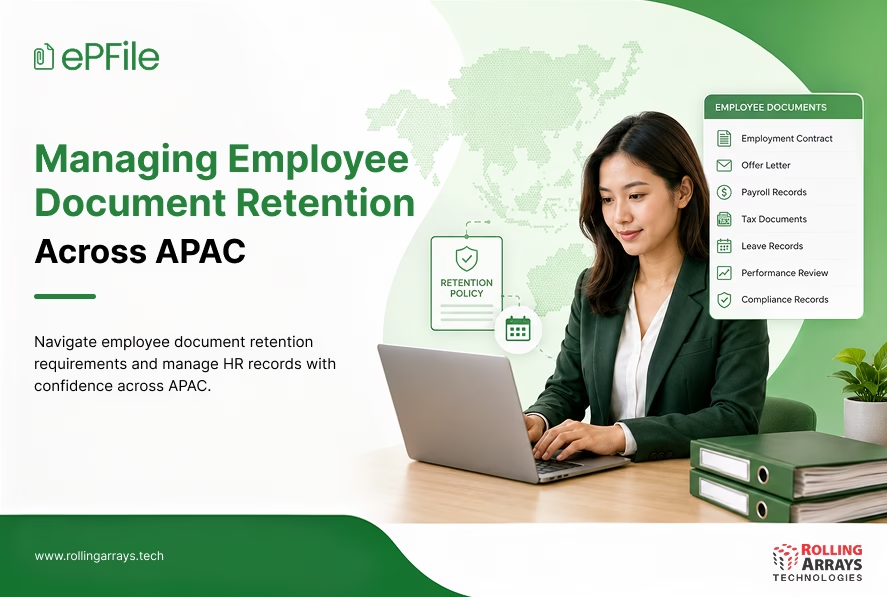
As organizations expand across Asia Pacific, managing employee documents becomes more complex. Different countries have varying legal and regulatory requirements for retaining employment records, payroll information, contracts, and other HR documents. A well-defined employee document retention policy helps organizations maintain compliance, strengthen governance, and ensure employee records remain accessible throughout their required retention period. This article explores document retention considerations across Singapore, Malaysia, Hong Kong, and Australia, along with best practices for building a scalable HR records management strategy.
Why Employee Document Retention Matters
Employee documents are more than administrative records. They provide evidence of employment decisions, support regulatory compliance, assist during audits, and help organizations respond to legal or operational requests.
Without a structured retention policy, organizations may:
- Retain documents longer than necessary
- Delete records prematurely
- Struggle to locate historical employee files
- Increase compliance risks
- Create inconsistencies across regional offices
A consistent retention strategy enables HR teams to manage employee records confidently while supporting local regulatory requirements.
Why APAC Organizations Need Country-Specific Retention Policies
Organizations operating across multiple APAC countries often manage employees under different employment laws and record-keeping requirements.
A single global policy may not address every local obligation.
For example:
- Employment record retention periods may differ between countries.
- Payroll documentation may have separate retention requirements.
- Tax-related employee records often follow different regulations.
- Certain documents may require longer retention for legal or compliance purposes.
Building country-specific retention guidelines within a centralized HR document management strategy helps organizations remain compliant while maintaining operational consistency.
Employee Document Retention Considerations Across APAC
While retention requirements vary across jurisdictions, organizations should establish country-specific policies that align with local employment, tax, and regulatory obligations. The following provides a high-level overview of common considerations.
Organizations typically retain documents such as:
- Employment contracts
- Payroll records
- Leave records
- Tax-related documents
Employment and tax regulations require employers to retain specific employee records for prescribed periods.
Malaysia
Organizations commonly retain:
- Employment records
- Payroll documents
- Statutory contribution records
Retention obligations depend on employment and statutory requirements.
Hong Kong
Typical employee records include:
- Employment contracts
- Wage records
- Attendance records
Employers are expected to maintain employment-related documentation to support labour compliance.
Australia
Organizations generally retain:
- Employment agreements
- Payslips
- Leave records
- Superannuation records
Fair Work and taxation regulations require employers to maintain employment records for specified retention periods.
Note: Retention requirements may change over time. Organizations should consult legal or compliance professionals to confirm the latest regulatory obligations.
Documents That Typically Require Retention
Regardless of country, most organizations maintain retention policies for the following categories of employee documents:
- Employment applications
- Offer letters
- Background verification records
- Employment contracts
Employment Records
- Confirmation letters
- Salary revision letters
- Promotion records
- Performance reviews
- Training certifications
Payroll and Benefits Documents
- Payroll records
- Tax documentation
- Benefits enrollment records
- Leave records
Compliance Documents
- Policy acknowledgements
- Regulatory certifications
- Mandatory training records
- Audit-related documentation
A structured retention framework helps ensure these records remain secure, accessible, and available for the appropriate retention period.
Best Practices for Managing Employee Document Retention
Creating a document retention policy is only the first step. Organizations also need consistent processes to ensure employee records remain secure, accessible, and compliant throughout their lifecycle.
Define Retention Categories
Different document types often require different retention periods. Instead of applying a single retention rule to every employee record, organizations should classify documents into categories such as:
- Recruitment documents
- Employment records
- Payroll and tax records
- Performance records
- Compliance documentation
- Separation and exit records
Categorizing documents helps organizations apply appropriate retention policies while simplifying records management.
Centralize Employee Document Storage
Managing employee documents across email, shared folders, and local drives makes it difficult to apply consistent retention policies.
A centralized document repository helps organizations:
- Maintain a single source of truth
- Improve document visibility
- Simplify retention management
- Support secure document access
- Reduce duplicate records
Centralized document management also makes it easier to demonstrate compliance during audits and regulatory reviews.
Automate Retention Policies
Manual tracking of document retention dates becomes increasingly difficult as organizations grow.
Automated retention policies help organizations:
- Apply retention rules consistently
- Monitor document lifecycle stages
- Identify records approaching retention limits
- Support document archival
- Reduce the risk of accidental deletion
Automation minimizes administrative effort while improving governance across the employee document lifecycle.
Strengthen Document Security
Employee records often contain confidential personal and employment information.
Organizations should protect these records through:
- Role-based access controls
- Document classification
- Approval workflows
- Audit trails
- Secure document storage
These capabilities help ensure only authorized users can access sensitive employee information.
Extending SAP SuccessFactors with Intelligent Document Retention
SAP SuccessFactors provides a strong foundation for managing employee data and core HR processes. As organizations expand across multiple countries, many extend their existing HR environment with intelligent document management to better manage document retention and governance.
ePFile by Rolling Arrays Technologies helps organizations:
- Centralize employee document management
- Organize documents using structured categories
- Apply configurable document retention policies
- Generate employee documents using AI-powered templates
- Enable intelligent document search
- Automate document workflows
- Strengthen governance through role-based access controls
By combining document generation, storage, retrieval, and retention management within a single environment, organizations can improve compliance while continuing to work within SAP SuccessFactors.
Building a Scalable APAC Retention Strategy
Organizations operating across Singapore, Malaysia, Hong Kong, and Australia benefit from adopting a consistent retention framework while accommodating country-specific requirements.
A scalable approach typically includes:
- Standardized document categories
- Country-specific retention schedules
- Centralized document storage
- Automated retention workflows
- Secure role-based access
- Regular policy reviews
- Audit-ready document governance
Rather than managing retention manually in each location, organizations can implement standardized processes that improve consistency while supporting local regulatory obligations.
Benefits of a Structured Employee Document Retention Policy
A well-defined retention strategy delivers operational and compliance benefits across the organization.
Improved Regulatory Compliance
Consistent retention practices help organizations maintain employee records in accordance with local employment and regulatory requirements.
Better Governance
Structured retention policies improve document ownership, lifecycle management, and organizational control over employee records.
Faster Audit Preparation
Centralized employee records with defined retention schedules simplify document retrieval during internal audits and regulatory reviews.
Reduced Administrative Effort
Automating document retention minimizes manual tracking and reduces the workload associated with managing employee records.
Greater Operational Consistency
Standardized retention policies create a consistent approach to document management across countries, business units, and HR teams.
Best Practices Checklist for Employee Document Retention
Organizations can strengthen employee records management by adopting these best practices:
- Define document retention categories based on document type and business requirements.
- Maintain country-specific retention schedules to support compliance across different jurisdictions.
- Centralize employee document storage to improve visibility and governance.
- Implement role-based access controls to protect confidential employee information.
- Automate document retention workflows to reduce manual administration and improve consistency.
- Review retention policies regularly to stay aligned with changing employment and regulatory requirements.
- Enable intelligent search to retrieve employee records quickly during audits or compliance reviews.
- Maintain audit trails and document history to improve accountability and support regulatory compliance.
Following these practices helps organizations build a scalable retention framework that supports both operational efficiency and compliance across APAC.
Conclusion
Managing employee document retention across Asia Pacific requires a structured approach that balances operational efficiency with country-specific compliance requirements. As organizations expand across Singapore, Malaysia, Hong Kong, Australia, and other APAC markets, standardized document categories, centralized storage, and automated retention policies become essential for maintaining accurate employee records.
By combining intelligent document management with configurable retention policies, organizations can improve governance, simplify audit preparation, and reduce the administrative effort associated with managing employee records.
ePFile by Rolling Arrays Technologies extends SAP SuccessFactors with intelligent document management capabilities that help organizations centralize employee documents, automate document workflows, and support scalable retention policies across multiple countries.
Looking to simplify employee document retention across your APAC operations?
Discover how ePFile helps organizations centralize employee records, automate document management, and support configurable retention policies while extending SAP SuccessFactors.
Explore ePFile or connect with our team to learn more.
Frequently Asked Questions About SAP SuccessFactors Document Management
What is an employee document retention policy?
An employee document retention policy defines how long organizations should retain different types of employee records before archiving or securely disposing of them. It helps support compliance, governance, and effective records management.
Why do document retention requirements differ across APAC countries?
Employment, tax, payroll, and privacy regulations vary across jurisdictions. As a result, organizations operating in multiple countries often need country-specific retention schedules while maintaining a consistent global document management strategy.
What employee records should organizations retain?
Organizations typically retain employment contracts, offer letters, payroll records, tax documents, leave records, performance reviews, training certifications, compliance documents, and separation records, based on applicable legal and business requirements.
How can organizations simplify employee document retention?
Can SAP SuccessFactors support employee document retention?
SAP SuccessFactors provides a strong foundation for managing employee data. Organizations can extend it with intelligent document management solutions to centralize employee records, automate document workflows, and support configurable retention policies.
How does ePFile help manage employee document retention?
ePFile by Rolling Arrays Technologies extends SAP SuccessFactors with centralized document management, AI-powered document generation, configurable retention policies, intelligent search, workflow automation, role-based access controls, and audit-ready governance to simplify employee records management across the document lifecycle.


