
For enterprise organizations, workforce risks rarely emerge overnight. Rising attrition, critical talent gaps, declining engagement, and capability shortages often develop over time. Yet HR leaders frequently identify these challenges only after they begin affecting business operations.
CHROs need more than historical HR reports. They need the ability to recognize emerging workforce patterns, understand potential risks, and take action before those risks become larger business challenges.
Predictive HR analytics helps organizations move in this direction. By analyzing historical and current workforce data, enterprises can identify potential trends and support more proactive workforce decisions. With ReeCap, SAP SuccessFactors customers can bring AI-powered analytics and predictive workforce insights into their existing HR ecosystem.
Why Workforce Risks Challenge Enterprise HR Leaders
Enterprise CHROs manage workforce decisions across multiple departments, locations, business units, and employee groups. Each area generates valuable information, but connecting these signals to identify potential risks remains a challenge.
Consider a few common situations:
- Rising employee attrition: HR leaders notice increasing employee exits but struggle to identify which workforce segments require attention.
- Critical talent loss: Employees in important roles leave, creating capability gaps and operational disruption.
- Declining workforce performance: Performance trends change across teams, but HR leaders lack timely visibility into the underlying patterns.
- Skills shortages: Business expansion creates new capability requirements, while existing workforce skills may not meet future needs.
- Hiring quality concerns: Recruitment teams need to understand whether their hiring decisions translate into successful employee performance.
These challenges affect more than HR metrics. They can influence productivity, recruitment costs, business continuity, and organizational growth.
The challenge for CHROs is to identify these patterns early enough to make informed decisions.
Why Historical HR Reporting Is Not Enough
Traditional HR reporting helps organizations understand what has already happened.
For example, an attrition report can show how many employees left during a particular quarter. A performance report can highlight changes across departments. A recruitment report can track hiring activity.
These reports provide important visibility. However, CHROs also need answers to forward-looking questions:
- Which workforce segments may face higher retention risks?
- Where could critical talent gaps emerge?
- Which workforce trends deserve closer attention?
- What patterns could influence future workforce performance?
- Where should HR prioritize retention and development initiatives?
Answering these questions requires organizations to move beyond retrospective reporting and explore predictive workforce analytics.
How Predictive HR Analytics Helps CHROs Anticipate Workforce Risks
Predictive HR analytics uses historical and current workforce information to identify patterns that may indicate future outcomes.
Rather than relying only on historical metrics, HR leaders can explore potential workforce trends and investigate areas that require attention.
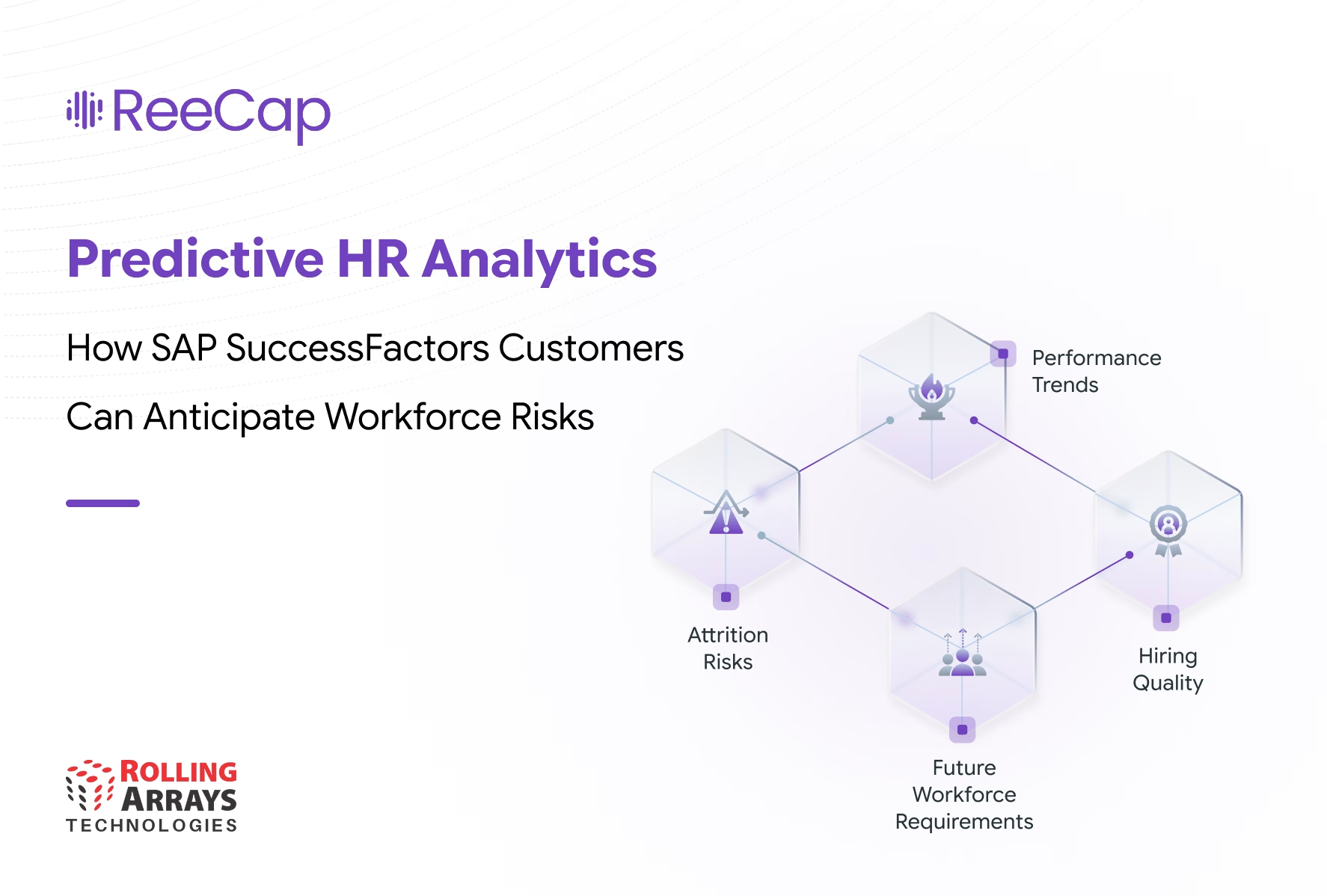
Identify Potential Attrition Risks
Employee attrition can create significant challenges when organizations lose experienced employees or people in business-critical roles.
Predictive workforce analytics can help HR teams examine historical attrition patterns and relevant workforce indicators to identify segments that may require closer attention.
For example, HR leaders can investigate whether certain departments, employee groups, or roles show patterns associated with increased employee exits.
This gives HR teams an opportunity to examine retention challenges and consider appropriate interventions.
Understand Workforce Performance Trends
Workforce performance influences organizational productivity and business outcomes.
Predictive analytics can help HR leaders examine historical performance patterns alongside relevant workforce information to identify emerging trends.
These insights can guide discussions around employee development, performance management, and workforce effectiveness.
Evaluate Hiring Quality
Hiring the right talent remains a major priority for enterprise organizations.
Recruitment teams need to understand whether their hiring decisions lead to successful employee outcomes.
AI-driven quality of hire analysis can help organizations examine relationships between recruitment indicators, onboarding information, and subsequent performance outcomes.
This can help talent acquisition leaders evaluate hiring patterns and improve future recruitment decisions.
Anticipate Future Workforce Requirements
Business strategies change, and workforce requirements change with them.
Predictive workforce analytics can help HR leaders examine workforce trends, identify potential capability gaps, and support discussions around future talent requirements.
This creates a stronger foundation for strategic workforce planning.
What Enterprises Need from Predictive HR Analytics Software
For enterprise HR teams, predictive analytics must do more than generate predictions. It should help leaders understand the underlying workforce information and connect insights with business priorities.
An effective HR analytics software solution should support:
Connected Workforce Data
HR leaders need a consistent view of workforce information across recruitment, performance, learning, attendance, engagement, compensation, and employee movements.
Understandable Predictive Insights
Predictions should help HR teams understand the trends and indicators behind potential workforce risks. Clear explanations allow leaders to investigate findings rather than rely blindly on a score.
Actionable Recommendations
Analytics becomes more valuable when it helps HR teams identify where they should investigate further and what interventions they could consider.
Executive-Level Visibility
CHROs need to communicate workforce risks and opportunities to CEOs, CFOs, and business leaders. Clear dashboards, visualizations, and executive-ready reports help connect workforce intelligence with business priorities.
How ReeCap Brings Predictive HR Analytics to SAP SuccessFactors
SAP SuccessFactors provides enterprises with workforce data across important stages of the employee lifecycle. ReeCap adds an AI-first analytics layer that helps organizations derive greater value from this information.
Built for SAP SuccessFactors, ReeCap combines AI-powered analytics, predictive capabilities, dashboards, visualizations, and workforce insights to support more informed HR decisions.
Identify Workforce Risks Through Predictive Insights
ReeCap helps HR leaders explore workforce trends and potential risks through predictive analytics, including areas such as retention and workforce attrition.
Instead of focusing only on historical workforce changes, leaders can investigate emerging patterns and identify areas that may require attention.
Connect Workforce Metrics Across HR Functions
Workforce risks often involve multiple HR dimensions.
For example, a retention challenge may require HR leaders to examine workforce composition, performance, engagement, compensation, and employee movements.
ReeCap provides analytics across workforce areas such as talent acquisition, attendance, learning, performance, engagement, rewards, skills, and exit data.
This helps HR leaders explore workforce information in a more connected way.
Turn Predictive Insights into Executive Conversations
Identifying a potential workforce risk is only the beginning. CHROs must also communicate its significance to business leadership.
ReeCap helps transform workforce data into dashboards, visualizations, AI-generated storyboards, and executive-ready insights.
This allows HR leaders to explain workforce trends, highlight potential risks, and support discussions around appropriate business actions.
Analyze SAP SuccessFactors Data Without a Separate Data Warehouse
ReeCap connects with SAP SuccessFactors and provides an AI-first analytics experience without requiring a separate data warehouse.
Organizations can build on their existing SAP SuccessFactors investment while extending their workforce analytics capabilities.
Move from Reacting to Workforce Risks to Anticipating Them
The value of predictive HR analytics lies in helping organizations recognize potential challenges earlier and make more informed decisions.
For CHROs, this means moving beyond questions about how many employees left, how performance changed, or how many positions remain vacant.
It means asking what workforce patterns may indicate, where the organization could face future challenges, and what HR can do today to prepare.
ReeCap helps SAP SuccessFactors customers move toward this approach through AI-powered workforce analytics, predictive insights, and executive-ready reporting.
The objective is not simply to predict workforce outcomes. It is to give HR leaders better information to support the decisions that shape their organization’s future.
Key Takeaways
- Predictive HR analytics helps enterprises identify potential workforce risks using historical and current workforce information.
- CHROs can use predictive workforce analytics to investigate attrition patterns, talent requirements, hiring quality, and performance trends.
- Historical HR reports explain what happened, while predictive analytics helps organizations explore what could happen next.
- Enterprise HR analytics software should provide understandable insights, relevant context, and actionable recommendations.
- ReeCap brings AI-powered and predictive analytics to SAP SuccessFactors customers without requiring a separate data warehouse.
- The ultimate goal is to help HR leaders anticipate workforce challenges and support proactive business decisions.
Frequently Asked Questions
What is predictive HR analytics?
Predictive HR analytics uses historical and current workforce data to identify patterns and estimate potential future workforce outcomes. Organizations can use it to investigate attrition risks, workforce performance trends, hiring quality, and future talent requirements.
How does predictive analytics help CHROs?
Predictive analytics helps CHROs identify potential workforce risks, understand emerging trends, and support proactive decisions around retention, recruitment, performance, and strategic workforce planning.
What is the difference between HR analytics and predictive HR analytics?
HR analytics covers the analysis of workforce data to understand employee trends and HR performance. Predictive HR analytics focuses specifically on using historical and current information to estimate potential future outcomes.
Can SAP SuccessFactors customers use predictive workforce analytics?
Yes. SAP SuccessFactors customers can extend their analytics capabilities through solutions such as ReeCap, which provides AI-powered workforce analytics and predictive insights using SuccessFactors data.
How does ReeCap support predictive HR analytics?
ReeCap provides AI-first talent analytics for SAP SuccessFactors, helping organizations explore workforce trends, investigate potential retention risks, analyze workforce data, and generate executive-ready insights.
Does predictive HR analytics guarantee accurate workforce predictions?
No. Predictions represent estimates based on available data, model design, and underlying assumptions. Organizations should validate predictive insights against actual workforce outcomes and use them alongside HR expertise and business context.


